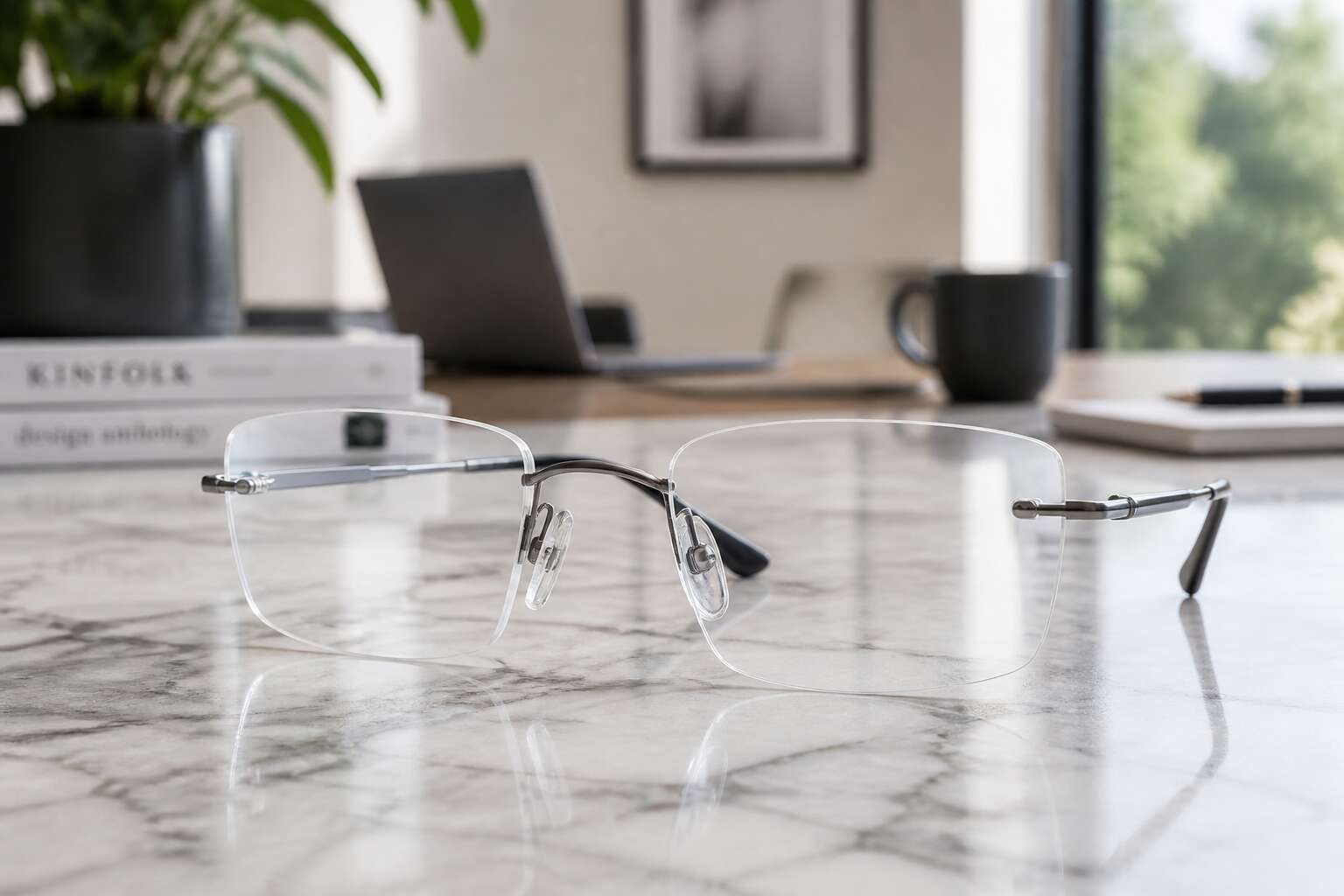
The Appeal of Rimless Eyewear
Aesthetics of Minimalism
Somewhere between fashion and function, there is a quiet rebellion: the choice to wear almost nothing at all. Prescription glasses rimless have become the modern uniform for those who believe true style whispers rather than shouts. The frames disappear, leaving only the pure optical clarity of the lens and the unguarded architecture of your face. I have always found this aesthetic deeply intimate. You are not hiding behind a bold acetate shield. Instead, you are offering a portrait of yourself, unobstructed and unembellished.
This minimalism is not an absence of design, but a precision of it. To wear rimless glasses is to commit to a certain confidence. You trust that your presence, not your accessory, commands the room.
– The visage remains the focal point, never the hardware.
– The lightweight construction offers a physical freedom that feels like liberation.
– The absence of a frame creates a seamless transition between your features and your environment.
It is a beautiful paradox. You buy prescription glasses rimless to see the world more clearly, yet the true revelation is how clearly the world sees you. When the ornamentation is stripped away, what remains is the pure essence of a face, framed only by light and the subtle edge of a lens. That is the quiet luxury of minimalism. It does not beg for attention. It simply deserves it.
Unmatched Lightness
Fifteen grams. That is the weight difference between a standard acetate frame and most prescription glasses rimless. Fifteen grams sounds negligible until your ears carry it from sunrise to midnight. The relief accumulates. Your sinuses stop complaining. The constant, low-grade pressure you never named simply disappears.
Engineers achieve this by removing the outer structure. Lenses are drilled directly and held with tiny nylon cords or hidden screws. The absence of a frame changes the balance point toward the centre of your face. The lenses stay put when you lean forward or glance sideways.
- Less material against the skin reduces irritation in warm months.
- A lighter profile avoids the usual dents on your nose.
- Reduced momentum keeps frames steady during sudden movement.
South African optometrists report that patients who switch to prescription glasses rimless forget they are wearing anything at all. That forgetfulness is the true measure of lightweight eyewear.
A Professional Staple
When a Johannesburg executive walks into a boardroom, the glasses do not announce themselves. Prescription glasses rimless act as a quiet endorsement of competence. They prioritise function over ornament. In professions where trust is currency, removing the barrier between the face and the observer matters.
South African opticians note a steady shift among lawyers, architects, and lecturers. These wearers choose rimless for presentations and client meetings. The lenses catch light naturally, without frame shadows distorting the view. I have often found that rimless design changes how people perceive authority. For those who speak for a living, this clarity is invaluable.
The professional appeal breaks down into practical moments:
- Interviews require direct eye contact; rimless removes the distraction of hardware.
- Video calls benefit from reduced reflections.
- Long workdays demand equipment that fades into the background.
Prescription glasses rimless allow the face to carry the message. The glasses become a servant, never the master.
Versatility Across Face Shapes
A high cheekbone does not need a frame to highlight it. A soft jawline does not need a harsh rectangle to balance it. Prescription glasses rimless excel because they disappear into the architecture of the face. They do not correct, they merely occupy the space.
Consider the common concern about face length. A wide forehead paired with a narrow chin can appear top-heavy with bold acetate. Rimless allows the eye to travel freely without border interruptions. Conversely, a fully round face retains its softness when nothing boxes it in.
- For heart shaped faces, rimless minimises the width of the temples.
- For rectangular faces, they do not exaggerate the length.
I have watched friends in Durban swap their chunky frames for rimless pairs at their optician’s suggestion. The effect is immediate! The versatility of prescription glasses rimless shows itself best in profile. Suddenly, the conversation is about their eyes, not the merchandise on their nose. That is the true appeal. It listens to the bone structure, never fights it.
Choosing the Right Components for Rimless Frames
Understanding Lens Thickness
An exposed lens edge hides nothing. When you choose prescription glasses rimless, the lens becomes the frame, and every component faces scrutiny. I put the lens index first. A high-index material, usually 1.60 or greater, keeps strong prescriptions from appearing bulky. Edge thickness stays under two millimetres.
Mounting hardware deserves equal attention. Rimless frames use tension-lock mechanisms or drilled screw mounts. Drilled lenses require harder materials to prevent cracking. Tension-lock systems allow quicker adjustments, though they may loosen with daily wear.
- Prescription strength determines the minimum lens index.
- Edge polishing prevents light scatter along the visible perimeter.
- Drill hole placement affects how the lens distributes stress.
Your optician should measure pupillary distance precisely before ordering prescription glasses rimless. That measurement dictates drill hole alignment. Miss it, and the lens sits crooked!
Frame Materials: Titanium vs. Stainless Steel
When selecting frame materials for prescription glasses rimless, titanium offers distinct advantages. It resists corrosion from South African humidity and skin oils, and it weighs nearly half as much as stainless steel. Your nose and ears will notice the difference by midday.
Stainless steel brings its own strengths. It is stiffer, which means the lens sits more rigidly in the mount. It also costs less. For a patient with a modest budget, steel remains a sensible choice.
- Titanium suits sensitive skin and active lifestyles.
- Stainless steel suits heavier prescriptions that need a firm hold.
I have seen both materials fail when the drilling specifications are ignored. The alloy matters less than the precision of the drill hole. A patient’s prescription strength and tolerance for weight remain the deciding factors for prescription glasses rimless.
Durability and Flexibility
Hinges and drill mounts carry the entire burden of a lens that has no frame to protect it. A screw that loosens by half a millimetre changes the geometry of the entire pair. The lens rarely fails. The components fail first. I have seen prescription glasses rimless fail because a hinge pin sheared off after eighteen months of daily use.
The parts that matter most are the smallest ones. Spring hinges absorb the strain of taking glasses off with one hand. Locking screws with nylon patches resist vibration. The mount itself should be machined, not cast, because cast metal hides internal voids. For prescription glasses rimless, the junction between lens and hinge is the point of maximum stress.
Durability comes down to small details:
- The screw threads match the barrel exactly
- The hinge has a hardened steel core
- The lens hole is polished, not merely drilled
Flexibility comes from the temple arms, not the lens bridge. A rigid bridge transfers every bump directly to the lens edge. That is where cracks begin.
Customization Options
The average South African replaces prescription glasses rimless not because the lens cracked, but because a hinge pin let go under the strain of a daily commute. I have watched this happen enough times to respect the quiet engineering behind each component. The choice of mounting system, bridge profile, and temple wire thickness determines whether the pair outlasts its prescription.
Consider the bridge. A curved profile suits the low nose bridges common across many South African face shapes, while a straight profile distributes pressure evenly for high bridges. The temple wire gauge shifts everything. At 1.0 mm, the frame disappears visually but demands careful handling. At 1.4 mm, it sits heavier yet shrugs off the jarring of taxi rides and school runs.
- Friction mounts allow quick lens swaps but loosen over time.
- Screw mounts with nylon patches hold tension through temperature swings.
- Machined barrels resist the micro cracks that cast metal hides.
Customization options extend to the temple arm length and the droop angle behind the ear. Each adjustment repositions the balance point, turning prescription glasses rimless into a tool calibrated to your own posture, not a generic compromise.
Bridge and Nose Pad Styles
Most people never think about nose pads until they leave red marks on a hot Johannesburg afternoon. Prescription glasses rimless start to fail at the nose pad long before the lens cracks. A flat pad spreads pressure across a wide surface, while a rounded pad settles into the nasal bridge without digging in.
- Screw mounted nose pads allow micro adjustments with a tiny screwdriver.
- Push in nose pads snap into the rimless mount and resist corrosion from sweat.
- Glide pads use a soft silicone core that moves with your face.
The bridge itself must match the pad style. Titanium prescription glasses rimless mount a keyhole bridge with adjustable arms. The pad arm length determines the fit; a short arm pulls the frame too close, a long arm lets it slide. A frame that shifts when the wearer shakes their head exposes a mismatch in nose pad geometry.
How Rimless Glasses Are Crafted
The Art of Lens Edging
Lens edging is where prescription glasses rimless succeed or fail. The process involves cutting the lens to exact specifications, then drilling tiny holes or cutting grooves into the material. A millimetre off and the lens wobbles, or worse, fractures. South African technicians use CNC machines that trace the lens outline with lasers. The edging must account for the lens curve, the pupil distance, and the frame’s mounting style.
The edge treatment matters more than the lens itself. A polished edge diffuses light better. A rough edge catches reflections. The choice depends on your lifestyle. Some options include:
- Polished edges for a clean, invisible look
- Flat edges for a sharper, modern profile
- Grooved edges for extra grip on mounting hardware
The drilling process for prescription glasses rimless requires steady hands. Each hole must align perfectly with the hinge. If the angle is off by two degrees, the frame will sit crooked on your nose. That is why optometrists send rimless work to specialised labs.
Precision Drilling Techniques
Two degrees is all it takes. A drilling error of that size will tilt the entire frame on your nose. When crafting prescription glasses rimless, technicians treat each lens as a one shot operation. There is no second attempt once the glass is bored.
South African optical labs employ CNC stations with diamond coated burrs. These burrs spin at controlled speeds while optical sensors monitor the lens surface. The machine adjusts its path based on lens curve and thickness. Any miscalculation creates micro stress fractures that may surface months later. We have seen rimless mounts fail a year after fitting because of an imperfect bore.
For prescription glasses rimless, the mounting hardware determines the bore size. Some hinges use nylon bushings, others use threaded metal posts. Each requires a different drill speed and pressure. The operator reads the material and adjusts accordingly.
Mounting Hardware and Fasteners
A single loose screw is enough to ruin a rimless frame. The lens sits crooked, and the whole look falls apart. South African optical workshops treat fastener selection as a precision step, not an afterthought. The choice depends on lens edge thickness and the patient’s daily wear habits.
Most modern mounts use one of two systems:
- Compression mounts with nylon bushings
- Through-hole mounts with threaded metal posts
Each requires a different bore diameter and insertion angle. Get this wrong and the lens will shift or develop micro cracks.
For prescription glasses rimless, fastener material affects long-term stability. Titanium screws resist corrosion but can bind when over-tightened. Stainless steel screws tolerate more torque. Some labs add nylon washers to spread pressure evenly.
A correct mount allows slight lens flex without movement. A clicking sound means the bore is too wide. On prescription glasses rimless, a rigid temple feel means tension is too high.
Styling Rimless Glasses with Confidence
Office-Ready Looks
Wearing prescription glasses rimless to the office changes how people read your presence. The lenses do the work while the frame stays out of sight. That effect suits South African workplaces where meetings shift between formal boardrooms and casual breakout spaces. I have watched colleagues replace heavy plastic frames with rimless pairs and appear more approachable during presentations.
A few practical choices keep the look sharp without extra effort.
- Select dark temples with clear lenses for client-facing days.
- Choose a brushed metal finish for video calls, since it reduces glare.
- Keep a cleaning cloth in your desk drawer for midday touch-ups.
The result is an office wardrobe that looks complete. Prescription glasses rimless let your work speak first, and that is the confidence you want when the agenda turns to you.
Weekend Casual Ensembles
Saturday mornings in Johannesburg rarely call for formal wear. Prescription glasses rimless slide into a weekend rotation with denim jackets and linen shirts. The lenses stay visible while the frame disappears, which fits a relaxed setting where bold frames might feel excessive.
Pair them with a chambray button-up and cropped trousers. Without a frame to match, your outfit gains freedom. A friend once said my rimless pair looked like I had simply forgotten to remove them. That is the effect you want on a lazy market stroll.
Evening and Formal Attire
A dinner jacket demands discipline. Your accessories must follow suit. Prescription glasses rimless offer a solution for formal evenings where bold acetate frames feel like an interruption. With no frame to distract, the lenses become a quiet extension of your gaze.
At a recent charity ball in Cape Town, I watched a guest in a midnight blue gown pair her attire with rimless spectacles. The effect was seamless. Her face remained the focal point, and the glasses added clarity without shouting for attention. That balance is rare in evening wear.
For gala nights and black-tie events, keep these principles in mind:
- Select lenses with a matte edge to reduce reflections
- Choose thin titanium arms that disappear behind your ears
- Ensure the bridge sits flush against your nose for a tailored look
Prescription glasses rimless hold their own in formal settings. They never compete with a jacket or necklace. They simply allow you to see and be seen with precision.
Sporting and Outdoor Activities
On the trail, every gram matters. A heavy frame bounces. It slips. Prescription glasses rimless solve this. The absence of a frame reduces weight and removes the blur of plastic edges from your peripheral vision. I have worn them on mountain bike rides through the Cape Winelands, where dust and sweat are constant companions. The lenses stay put, especially with a grippy nose pad.
For outdoor enthusiasts, consider these features:
- Polycarbonate lenses for impact resistance
- Rubberised nose pads for grip
- Adjustable titanium temples for a secure fit
The open design prevents fogging during sudden weather changes. You see more of the trail and less of your eyewear. That clarity matters when navigating rocky paths at dusk. Rimless prescription glasses have moved past the boardroom. They belong outside.
Caring for and Extending the Life of Rimless Eyewear
Daily Cleaning Best Practices
The minimalist design of prescription glasses rimless conceals an intricate assembly where every drop of cleaning solution matters. Daily care demands precision. Warm water and a drop of mild dish soap work better than commercial sprays. Microfiber cloths are your ally. Avoid paper towels; their fibres snag on the exposed lens edges.
- Rinse under lukewarm water first.
- Apply soap with fingertips only.
- Pat dry, never rub.
This simple ritual prevents the buildup of skin oils around the screw mounts. Those tiny titanium joints, so light you forget they are there, respond poorly to chemical solvents. The exposed edges of the lens, left bare by the rimless design, are prone to chipping if you press too hard. So treat each wipe as a gentle pass. Your prescription glasses rimless will provide years of clear vision.
When to Tighten Screws
Tightening the screws on your prescription glasses rimless is the most important maintenance task you will perform. Most people get it wrong. They ignore a loose screw until a lens pops out, or overtighten and strip the mount entirely!
Screws work loose over time because daily movement creates constant micro-vibrations, not because of poor craftsmanship. Opening a door, nodding during a meeting, even turning your head sends shocks through the frame.
How do you know when to tighten them? Listen for the signs:
- A faint rattle when you set the glasses down
- One lens sitting higher than the other in a mirror
- A rough edge catching your fingernail on the screw head
Each signal means the hardware needs attention. Tighten gently with a precision screwdriver, but do not force it. Overtightening strips the delicate threads. A light touch keeps your prescription glasses rimless secure for years.
Avoiding Common Breakage Points
The most common cause of rimless eyewear failure is not impact but habit. Rubbing your nose with one hand while wearing prescription glasses rimless twists the bridge and stresses the drill holes. Over time, micro-fractures form around the lens mounts. The screw point surrenders first, especially when you pull glasses off with a single hand.
Breakage points rarely announce themselves. A hairline crack appears without warning. The temple hinge strains silently until it snaps. For rimless designs, the lens carries structural duty, so handling technique matters.
- Always use both hands to remove your eyeglasses.
- Set them on a stable surface, never lens down.
- Adjust nose pads with a gentle pinch, not a forceful press.
These routines extend the life of your prescription glasses rimless. Treating lens edges as fragile surfaces prevents common failures. Your daily habits, not the craftsmanship, dictate longevity.
Professional Adjustments and Repairs
Most wearers forget that prescription glasses rimless require periodic professional attention. A full service every twelve months catches alignment issues before they affect vision. The optician realigns the bridge to your facial contours and checks the tension on each temple hinge.
They also inspect the drill holes for stress rings, which are invisible to the naked eye. A typical repair session follows a sequence:
- Lens removal for edge inspection
- Replacement of worn nylon washers
- Torque calibration on all fasteners
- Frame alignment on a precision jig
After reassembly, the technician verifies the optical axis against your prescription. This service costs far less than replacing a damaged frame. Schedule it annually, especially if you wear your glasses outdoors in South African sunlight, which degrades washers faster.
Storing Your Glasses Safely
Most wearers of prescription glasses rimless have a story about a frame that died without falling. The usual culprit is storage: a pair left on a kitchen island, a quick toss onto a bedspread, a slide down a car seat. Rimless construction has no protective borders, so the lenses and drill mounts take every impact directly.
- Never store them lens-side down on hard surfaces; scratches on rimless lenses are costly.
- Keep them away from damp bathrooms, where humidity corrodes metal fasteners.
- Avoid hanging them from a shirt collar; the bridge is engineered for your face, not fabric tension.
For safe storage, keep a rigid case close to your usual seating areas. Fold the temples first and place the lenses upward into the case. Avoid leaving prescription glasses rimless near a desk edge or beside a sink, where a single knock misaligns the optical axis permanently.


0 Comments