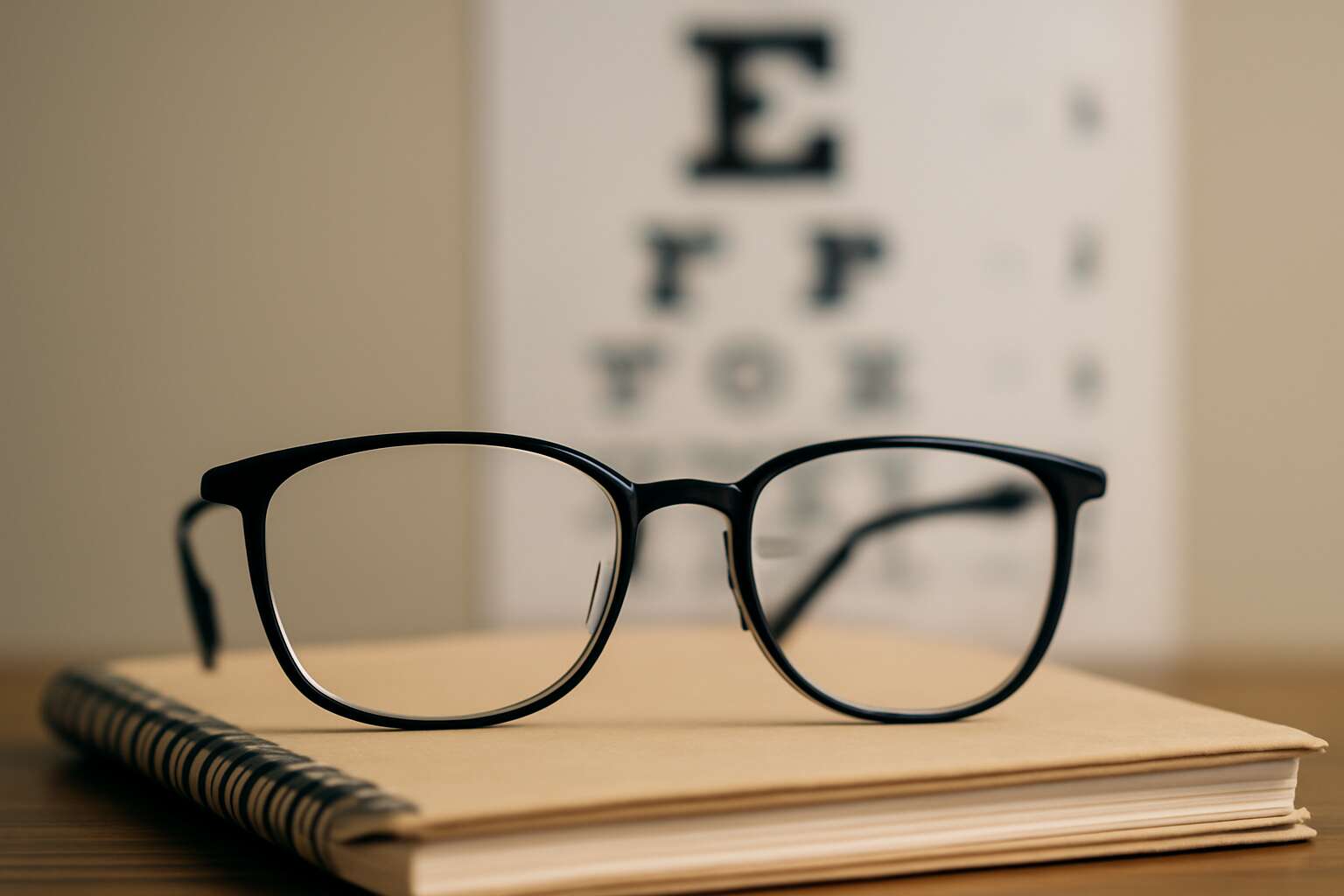
Understanding prescription glasses and vision correction
What prescription glasses do and how they help vision
Clear sight shapes every moment, from a rooster’s call at dawn to the last page of a ledger by lamplight. Across South Africa, many face vision changes that complicate daily chores—and yet a simple tool can bring relief. So, can prescription glasses correct vision and restore that sharpness to everyday moments, whether you’re guiding a tractor along a dusty lane or reading the notes by the kitchen stove? A pair can lift a day’s load and bring calm to a busy kitchen!
Understanding their role helps you choose wisely.
- Correct common refractive errors like myopia, hyperopia, and astigmatism
- Provide sharp distance, intermediate, and near vision for daily tasks
- Relieve eye strain during long days of driving, reading, or screen use
In rural clinics and busy towns alike, the right lenses support clarity without fuss, turning long drives and careful handiwork into moments of confidence.
How lenses redirect light to improve focus
Light needs a guide to hit the right point on the retina. The right prescription shapes that journey, bending rays so the image lands in sharp focus. Can prescription glasses correct vision? They can, by aligning how light passes through each lens to meet your eye’s needs and daily demands.
In practice, you’ll encounter three essentials:
- Lenses adjust focal length to bring distant and near images into crisp focus on the retina
- They correct nearsightedness, farsightedness, and uneven curvature (astigmatism)
- Coatings and careful fitting reduce glare and improve comfort for long days
Across South Africa, a well-chosen pair translates long hours of work into cleaner sight and calmer days.
Who benefits from prescription glasses
Across South Africa, roughly one in three adults relies on vision correction at some point. can prescription glasses correct vision? Yes—when lenses match your eyes and daily life, they bend light to land on the retina with clarity.
Prescription glasses go beyond basic optics. They tune focal length to suit distance and near tasks, reducing blur from screens, driving, or reading dense text.
Who benefits from prescription glasses includes:
- Students and desk workers needing crisp near and intermediate vision
- People with myopia, hyperopia or astigmatism
- Anyone enduring eye strain from long screens or daily tasks
In South Africa, the right pair means comfort, durability and a fit that lasts from early meetings to late shifts in front of screens.
What a typical prescription includes and means
Across South Africa, a third of adults rely on vision correction at some point. can prescription glasses correct vision — a question that sits at the frontier of everyday convenience and optical science. The short answer is yes—when the numbers align with how your eyes and life demand light to land crisply on the retina, clarity follows you from the desk to the doorstep.
A typical prescription includes these elements, translating numbers into your everyday view:
- Sphere (SPH) for nearsightedness or farsightedness
- Cylinder (CYL) for astigmatism
- Axis, the orientation of the cylindrical correction
- Pupillary distance (PD) to align the lenses with your pupils
- Add power (ADD) for reading distance
- Prism for alignment issues, in rare cases
Understanding these elements helps you choose frames, lenses and coatings that endure long meetings, screen hours, and late shifts—an approach that merges science with daily life in South Africa.
Short-term adjustments when starting glasses
Across South Africa’s bustling mornings and long Zoom marathons, new glasses can feel like stepping into a new lens universe. The common question is: can prescription glasses correct vision? The short answer is yes—when the correction aligns with how light lands on your retina and how your brain processes it. A typical prescription reshapes your sight by addressing SPH, CYL, and axis, but adaptation takes a moment. You might notice a touch of blur, headaches, or eye strain as your visual system re-optimizes. Frame comfort matters; slippage distracts from clarity.
During the initial days, allow your gaze to settle—new frames, different PD alignment, and screen distances create a perceptual shift. Your brain will learn; the crispness grows as you acclimate to lighter, sharper letters and more precise spacing. This is a normal rite of passage that often smooths out after a brief adjustment window.
Lens types and technologies that influence vision
Single-vision vs multifocal and bifocal options
In small-town mornings across the South African veld, I see how a clear view can reshape a day. Many wonder can prescription glasses correct vision; the answer lies in lenses that fit real life—from road trips to porch chats and farm tasks. The right pair eases strain and sharpens detail.
Lens types define distance vision. Here are the basics:
- Single-vision: one prescription for all distances, simple
- Bifocal: a visible line separates distance and near zones
- Multifocal/Progressive: seamless blend of distance, intermediate, and near
Each option fits busy routines and budgets.
Technologies shape how lenses work: lightweight materials keep frames comfortable; anti-reflective coatings reduce glare; photochromic options adapt to sun; and blue-light filters ease long screen days.
These choices reflect daily life here—unvarnished moments of farming, driving, and dawn gatherings—made clearer with the right lens.
Choosing lens materials and coatings
Across South Africa’s dawn-lit veld, vision clarity can reshape a day. So, can prescription glasses correct vision? The answer lies in lenses tailored to life—lightness, durability, and coatings that meet real routines—from road trips to porch chats and farm tasks.
Lens materials determine weight, thickness, and how comfortably they ride on a sunlit nose bridge. Here are the primary choices:
- Polycarbonate: lightweight, impact-resistant
- High-index plastics: thinner, stylish frames
- Trivex: sharp optics with featherweight feel
- Glass: exceptional scratch resistance, heavier but timeless
Coatings finish the experience: anti-reflective reduces glare on dusty gravel roads; scratch-resistant keeps life outdoors kinder to lenses; blue-light filters ease long screen days; photochromic options adapt to sun, from veld mornings to bright noons.
Blue light filters and anti-reflective coatings explained
Across South Africa’s dawn-lit mornings, light shapes decisions—it’s the one constant you notice before you notice yourself! Lens types and technologies influence how clearly you see—whether navigating road trips, porch chats, or busy workdays. Blue-light filters and anti-reflective coatings are practical tools that affect vision in everyday life.
Blue-light filters tune the passage of blue wavelengths, potentially easing digital strain; anti-reflective coatings reduce glare from sun, headlights, and dusty roads. Together they preserve contrast and comfort without altering the core prescription.
- Blue-light filters help manage high-energy wavelengths
- Anti-reflective coatings minimize reflections on screens and street signs
- Coatings enhance durability by resisting scratches and smudges
Readers may ask: can prescription glasses correct vision? The answer hinges on the right blend of material, lens type, and coatings that support your daily life while honoring the refractive needs.
High-index lenses and shaping for comfort
“Clarity is a compass for the day,” a South African optometrist reminded me. Lens types and technologies shape vision as much as the prescription itself, guiding light with daily comfort in mind.
High-index lenses offer thinner, lighter profiles for stronger prescriptions, reducing bulk without compromising optics. Aspheric shaping smooths edge distortion, sharpening peripheral vision and keeping you comfortable from morning commutes to evening tasks. These innovations address can prescription glasses correct vision by delivering precise focus while respecting your lifestyle.
- High-index materials: thinner, lighter, less bulky
- Aspheric designs: improved peripheral clarity and reduced distortion
In sunlit South Africa, the right lens tech lets light glide softly, turning everyday moments into a clear, confident journey.
Specialty lenses for tasks like computer work or sports
Nearly 60% of SA professionals report eye strain from screens, and the right lens tech can turn glare into lasting clarity. Lens types shape vision as much as the prescription itself, guiding light with daily wear in mind. The question can prescription glasses correct vision is nuanced—focus is about where and how light bends, not just what the eye needs.
Specialty lenses for computer work and sports address real-world eye use, not just generic optics. They direct light to the areas you rely on daily, reducing strain during long sessions and preserving depth perception on the field.
- Computer-focused designs with working-distance optimization
- Wrap-around sports lenses for peripheral clarity
- Task-specific variants that boost contrast in dim settings
On sunlit South African mornings, the right choice remains a blend of lifestyle and prescription—lenses that stay comfortable from office to outdoor adventures.
Common myths and misconceptions about glasses
Do glasses make your eyes weaker over time
In South Africa, eyewear myths travel faster than a speedboat on the Vaal River. Can prescription glasses correct vision? They correct the specific refractive error printed on the prescription, restoring daytime clarity, but they don’t cure the eye or halt natural adjustments.
Do glasses make your eyes weaker over time? Not. Eyeglasses don’t alter the eye’s structure; they simply compensate for imperfect focus. When glasses are worn as prescribed, comfort and performance often improve.
- Wearing glasses does not weaken the eyes or make vision worse over time
- Not wearing prescribed glasses can cause strain, headaches and blurry vision
- Stronger numbers do not equal worse eyesight; they reflect current refractive error
Ultimately, glasses are a precise tool that mirrors your current vision. People ask can prescription glasses correct vision, and the answer lies in correction, not eradication of underlying biology; regular eye exams track changes.
Can you outgrow a prescription
Across South Africa, myths about glasses travel faster than a speedboat on the Vaal. Readers wonder: can prescription glasses correct vision? The truth is they sharpen daytime clarity by correcting the refractive error printed on your prescription, not by curing the eye itself or halting natural changes.
- Myth: glasses ruin your eyes or make them weaker.
- Myth: you outgrow a prescription and will never need eye checks again.
- Myth: stronger lenses forever fix vision with no limits.
Glasses simply mirror your current refractive error. In SA, regular eye exams track changes and guide updates. When worn as prescribed, comfort and performance often improve; when not worn, strain, headaches and blurry vision can creep back.
Do glasses cure eye diseases or problems
Glasses aren’t magic, they’re precision instruments for daytime clarity. Readers wonder: can prescription glasses correct vision? The answer: they sharpen vision by fixing the refractive error on your prescription, not by curing the eye or stopping natural changes. Myths sprint faster than a Vaal speedboat—let’s debunk them with straight talk.
- Myth: glasses ruin your eyes or make them weaker.
- Myth: you outgrow a prescription and will never need eye checks again.
- Myth: stronger lenses forever fix vision with no limits.
In South Africa, regular eye exams track changes and guide updates. When worn as prescribed, comfort and performance improve; when not worn, strain and headaches creep back. Glasses mirror your current refractive error and do not cure eye diseases or reverse degenerative changes—but they remain essential for crisp, comfortable vision.
Over-the-counter readers vs prescription lenses
Glasses aren’t magic, yet myths sprint through communities like a sudden Cape storm. In South Africa, over-the-counter readers lure with instant fixes, but they aren’t tailored to your precise refractive error. Prescription lenses are forged for your eyes and updated as vision shifts, keeping comfort and sharpness on point.
- OTC readers give general magnification, not your exact prescription, which can lead to strain when worn long-term.
- Prescription lenses come with tailored options—single-vision, bifocal, or multifocal—plus coatings that support daily tasks and screen work.
- Regular eye exams in SA keep prescriptions current, catching changes before they cause headaches or blurred vision.
The lingering question can prescription glasses correct vision? The reality is that they fix refractive error, not cure eye diseases or halt natural ageing of the eye.
Progressive lenses vs traditional bifocals
Glasses aren’t magic, but myths sprint through communities like sudden Cape storms. In South Africa, the chatter asks: can prescription glasses correct vision? The answer is nuanced: they correct refractive error, not diseases or the ageing eye. From years of patient stories, I’ve heard this question pop up with surprising frequency.
Progressive lenses glide seamlessly from distance to near with no visible lines, while traditional bifocals show a distinct transition. Some celebrate progressives for fluid vision; others balk at initial distortion or a learning curve. Your choice hinges on daily tasks, budget, and comfort—especially if you spend hours in front of a screen.
- Myth: Glasses fix every eye problem instantly.
- Myth: Progressive lenses are just for seniors.
- Myth: Bifocals are unfashionable or clunky.
Understanding these nuances helps you navigate myths and pick the option that genuinely enhances focus and quality of life.
What prescription glasses can correct and what they can’t
Correctable refractive errors like myopia, hyperopia, and astigmatism
Across South Africa, about 1 in 3 adults rely on glasses to see the world clearly. You may wonder can prescription glasses correct vision, and the answer is nuanced—glasses fix many problems, but they don’t erase every eye health challenge. They turn blur into detail, guiding daily adventures from sunrise to sunset.
What they can correct spans the most common refractive errors that cloud ordinary sight.
- Myopia (short-sightedness) — distant objects appear blurry while close things stay sharp.
- Hyperopia (far-sightedness) — nearby text and details may blur, especially up close.
- Astigmatism — irregular curvature creates blurred or stretched vision at all distances.
- Presbyopia — age-related difficulty focusing on near tasks, often managed with reading or progressive lenses.
What they can’t fix goes beyond blur. Glasses don’t cure underlying eye diseases or reverse structural damage; cataracts, glaucoma, or retinal conditions may require medical treatment or surgery for real vision improvement while glasses support clearer everyday sight.
Situations where glasses don’t replace medical treatment
Glance at the world and ask, “can prescription glasses correct vision?” The answer isn’t a blunt yes or no; it’s a nuanced melody. For many, glasses sharpen blur into detail and light the path from sunrise to sunset.
What they correct is a realignment of focus—the kind that makes distant horizons legible and near screens tolerable. They also support presbyopia with reading or progressive designs, turning everyday tasks into clearer moments.
- Clearer distance vision for driving and outdoor scenes
- Sharper reading and screen work
- Balanced near vision with suitable lens designs
What they can’t fix lies beyond the frame. Glasses don’t reverse disease or structural damage; cataracts, glaucoma, or retinal conditions require medical care or surgery.
- Cataracts
- Glaucoma
- Retinal conditions
Impact of age-related changes and presbyopia
Across South Africa, more than half of adults over 40 report trouble with near or distant vision as presbyopia quietly advances. Can prescription glasses correct vision? They reshape how light meets the eye, turning blur into clarity while the world holds still for a moment.
Glasses address refractive errors—myopia, hyperopia, and astigmatism—by bending light to a sharper focus. They also assist with presbyopia using reading glasses or progressive designs, easing transitions from screens to pages and restoring a calmer, clearer field of vision!
They can’t reverse disease or structural changes in the eye. Cataracts, glaucoma, or retinal conditions require medical care and sometimes surgery—limits that keep vision honest, even when glasses polish the optics.
Vision vs eye health: understanding the limits
Across SA, more than half of adults over 40 report trouble with near or distant vision. Vision isn’t a universal fix; glasses guide light to where it should land, while the eye’s tissues stay unchanged.
This raises a key question: can prescription glasses correct vision? They correct refractive errors—myopia, hyperopia and astigmatism—and, for presbyopia, provide reading or multifocal options to ease transitions from screen to page.
- cannot reverse diseases like cataracts or glaucoma
- do not treat retinal conditions or systemic eye health issues
- don’t alter the eye’s actual structure outside of light refraction
In practice, they polish the optics but don’t heal the eye. For true eye health, underlying conditions need medical care, and surgery is sometimes the only fix. Glasses remain a reliable tool to see clearly, without claiming to cure what ails the eye.
When glasses alone aren’t enough and alternatives exist
Across SA, more than half of adults over 40 report trouble with near or distant vision. The lingering question can prescription glasses correct vision? They don’t perform miracles; they bend light so it lands where the retina can translate it into clarity, leaving the eye’s tissues unchanged.
- They sharpen daily vision by guiding light to the right retinal point.
- They cannot reverse disease, rebuild tissue, or treat unrelated eye health conditions.
Sometimes glasses alone aren’t enough; alternatives exist—from contact lenses to laser procedures and medical care to manage underlying issues.
In practice, the choice often weighs visible sharpness against risks to long-term eye health.
Buying, fitting, and maintaining prescription glasses
How to get an eye exam and obtain a prescription
Your next big task, from scrolling documents to driving home, hinges on clear sight. can prescription glasses correct vision? The answer isn’t a simple yes or no—it’s tied to the specific refractive error and a proper prescription. In South Africa, an aligned exam by a registered optometrist is the first step toward eyewear that truly fits your life.
Buying, fitting, and maintaining prescription glasses is about more than choosing a pretty frame. After the eye exam, you’ll receive a prescription. Use it to guide your choice of frame and lenses. Consider these aspects:
- Frame fit and bridge width
- Lens material and coatings
- Prescription validity and back-up pairs
- Comfort during wear
Maintain vision by keeping lenses clean, storing them in a case, and scheduling regular checkups. When cared for, glasses remain accurate and comfortable, supporting daily tasks without fatigue.
Selecting frames that fit your face and lifestyle
Frames aren’t just fashion accessories—they’re performance gear for daily life. A good fit makes vision effortless and fatigue rare. The question ‘can prescription glasses correct vision’ is nuanced, depending on your exact refractive error and a precise prescription. In South Africa, an aligned exam by a registered optometrist starts the journey to eyewear that truly fits your life.
Buying means selecting frames that balance face shape with lifestyle. After the exam, consider:
- Frame width that aligns with your cheekbones
- Bridge width for comfortable nose support
- Temple length for secure all-day wear
- Lightweight materials for comfort during long sessions
Maintenance is simple: clean lenses with a microfiber cloth, store them in a case, and schedule regular checkups to keep the fit and prescription precise.
Care tips to extend lens life and avoid damage
Buying prescription glasses in South Africa blends style with function. A precise exam, a frame that suits your life, and lenses that feel invisible—these are the hallmarks of eyewear that performs daily. The question can prescription glasses correct vision remains nuanced, hinging on your exact refractive error and ongoing eye health.
Fitting is the hinge that makes vision effortless: frame width, bridge comfort, and temple length all affect sharpness and wearability.
- Clean lenses with a microfiber cloth to extend life
- Store in a case to prevent scratches
- Book regular eye exams to keep your prescription accurate
With proper care, your lenses stay clear, durable, and comfortable for long sessions at work, study, or home.
Costs, insurance, and buying online vs in-store
South Africa’s eyewear market blends style with science, and prices can surprise even the most careful shopper. A precise exam, a frame that fits your life, and lenses that feel invisible—these are the hallmarks of eyewear that performs daily. The question—can prescription glasses correct vision—hinges on your exact refractive error and eye health. Not magic, but precise craft and care!
Fitting is the hinge of comfort and sharpness: frame width, bridge fit, and temple length influence wearability and focus. Costs vary with materials and coatings, and I’ve seen insurance cover portions under medical aid or eyewear allowances.
Buying online vs in-store comes with trade-offs: online stores offer choice and convenience, while in-store fitting provides hands-on adjustments and peace of mind.
- Online purchases: potential savings, easy price comparisons, and doorstep delivery.
- In-store visits: expert fitting, immediate lens swaps, and trusted warranties.
How often to update your prescription and signs it’s time
Buying prescription glasses in South Africa blends cosmopolitan flair with clear-eyed science. From online emporia to brick-and-mortar clinics, the market offers choice, service, and transparent costs. The aim is a frame that fits life, paired with lenses that render the world crisp and comfortable.
Fitting matters—width, bridge, and temple length shape wearability and sharpness. A precise fit keeps lenses aligned with the pupils, reducing distortion and fatigue, and invites confidence in every glance, whether at work or on the savannah road.
Maintaining keeps vision steady as the seasons change; prescriptions drift with age and health. The question lingers: can prescription glasses correct vision. Most adults update every year or two, guided by new signs and evolving needs: increasing blur, headaches, or eye strain after long tasks.
- Increasing blur at distance or near
- New headaches or eye strain
- Frames sliding or discomfort


0 Comments