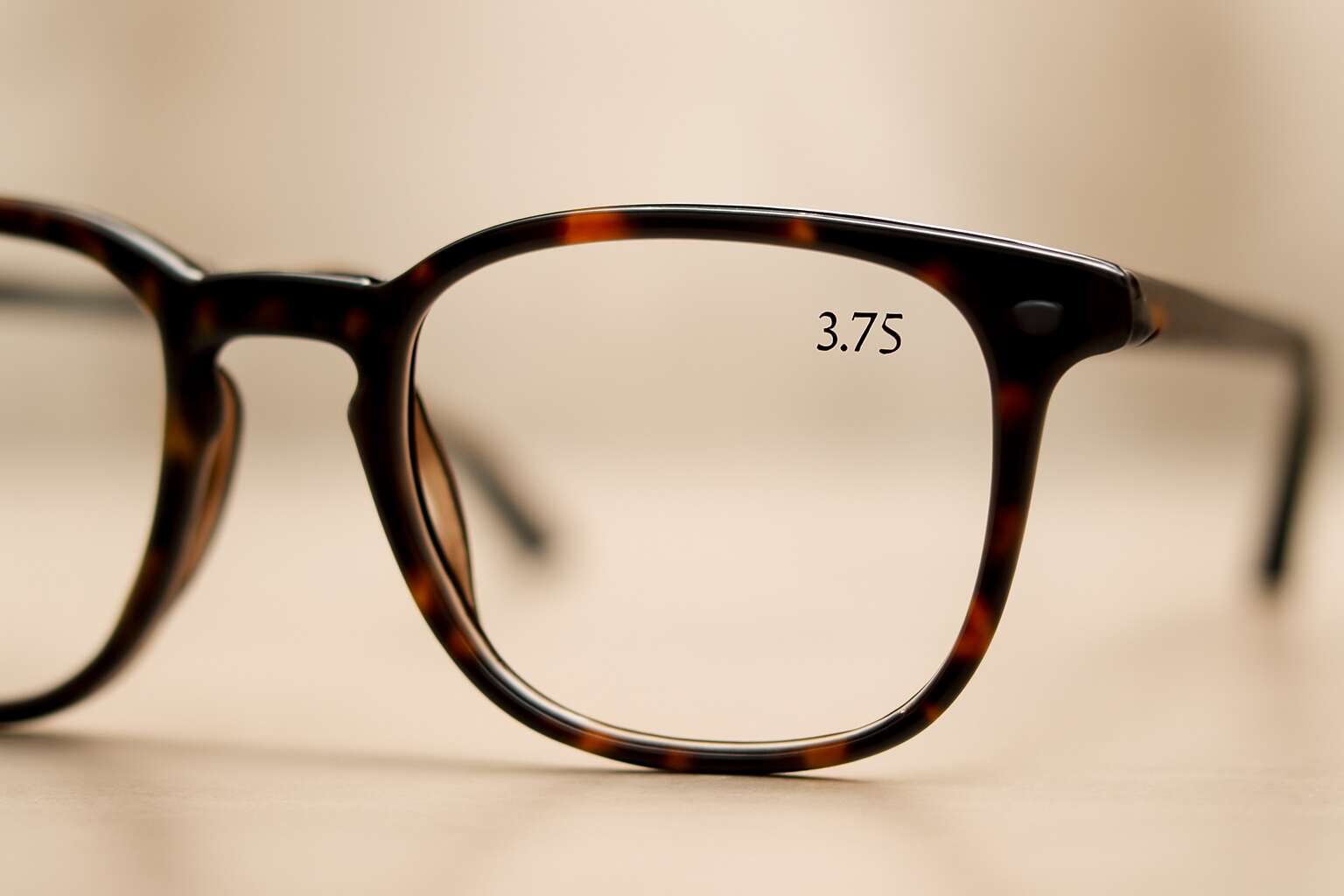
Understanding the basics of a three point seven five prescription
What a three point seven five prescription means in practice
In South Africa, nearly a third of adults rely on vision correction, and numbers rise with age. A single figure can unlock a world: 3.75 in a prescription. More than a datum, it maps how light bends for you, shaping what you see at a glance and at a distance. Understanding what a three point seven five prescription means in practice helps you choose frames with elegance and ease, avoiding the foggy look that dulls the hours with lesser measurements. For many, it balances computer work with street signs, a quiet doorway to comfort as afternoons dim.
When you encounter prescription glasses 3.75, the lens power translates to the focal bend your eyes demand. It can influence thickness, frame choice, and how comfortably you wear them after the first hour of use.
- Distance clarity versus near tasks
- Frame size and lens thickness
- Adaptation for screen work and long hours
How a 3.75 prescription compares to common lens strengths
Understanding the basics of a three point seven five prescription starts with a simple truth: it’s the precise bend your eyes rely on to switch between screens and street signs. Prescription glasses 3.75 sit in that pragmatic middle, delivering crisp distance with modest lens thickness. It’s a comfortable compromise for long days at the desk and quick forays outdoors—elegant without the heft, a small hero when the light fades.
To visualise how a 3.75 compares to common strengths, picture these broad bands:
- Low-range reading lenses: roughly 0.50–1.50D for near tasks and light computer work.
- Mid-range corrections: about 2.00–3.00D, a versatile balance for distance and screens.
- Stronger corrections: 3.75D and higher, prioritising distance clarity with lighter lenses.
Verifying and updating your prescription with your eye care professional
Vision is the boundary between chaos and order, a boundary you test with every screen glare and streetlight. In South Africa’s varied towns and city arteries, a prescription isn’t a relic of last year; it’s a living measure that responds to hours spent at desks, hours outside, and the subtle shifts of the eye. Verifying and updating your prescription with your eye care professional keeps that boundary taut and trustworthy. It’s especially true for prescription glasses 3.75—the precise hinge where clarity, weight, and comfort meet!
During a visit, the professional evaluates acuity, refraction, and alignment with real-world tasks—reading, driving, long chats. From my experience, staying current is a kindness to your future self. The aim isn’t novelty but the balance you’ve grown accustomed to. Keep records precise and share habits that stress vision; in South Africa, access to thoughtful care remains a quiet advantage that preserves the gaze.
Tips for communicating three point seven five needs when ordering glasses online
Clarity is the daily currency you spend on every screen and street corner. In South Africa, prescription glasses 3.75 sit at the crossroads of comfort and acuity, balancing lens thickness, weight, and the field of view. Grasping the basics of this size helps you translate real-world needs into online choices without getting lost in numbers.
Understanding this size helps you face online retailers with confidence, choosing frames that respect both style and the shape of your daily routines.
- Clear language about daily contexts
- Notes on comfort and weight
- Consistent terminology for lens features
These principles keep conversation constructive and the journey toward correct vision smoother than expected.
Frames and fit for higher prescription strength
Frame materials and edge thickness considerations
Frames for prescription glasses 3.75 aren’t just about style. They’re about fit. “Frame fit is the hidden engine behind comfort,” an optician once said, and it rings true in every pair sold.
Edge thickness climbs with higher prescriptions. For these, frame shapes that distribute weight and hide lens heft matter: full rims with a gentle bevel or mid-size fronts keep the profile sleek and comfortable.
- Titanium: ultra-light, strong, hypoallergenic.
- TR-90: flexible, durable, affordable.
- Acetate: color-rich, sturdy, customizable.
- Stainless steel: slim, durable, corrosion-resistant.
In South Africa, the right mix of frame and lens helps every look stay sharp from morning meetings to late-night browsing!
Choosing lens size and shape to minimize thickness
“Frame fit is the quiet engine behind comfort,” an optician once said, and it shows up long before you step into daylight. In South Africa, where daily life blends commuting, work, and social scrolling, the right frame makes a bigger difference than you might think.
For higher prescriptions, edge thickness hides in the wrong frame. With prescription glasses 3.75, aim for a frame width that keeps the lens aligned with the pupils and a modest lens height to minimize thickness. A well-fitting frame feels lighter, even when the numbers aren’t.
Think of the frame as a cooperative partner with your lenses—shape, size, and fit working in concert so your look stays sharp from boardroom to late-night browsing!
Bridge fit and nose pad comfort for heavier lenses
Across South Africa, many wearers with prescription glasses 3.75 discover comfort before they notice the view. Frame fit is the quiet engine behind comfort—an unseen balance that sets the stage for a sharp gaze long before daylight strikes. Heavier lenses make that balance felt at the bridge.
Bridge fit and nose pad comfort become practical poets when lifting the weight from the brow. A saddle bridge or keyhole bridge spreads weight, while adjustable silicone pads cradle the nose, reducing slip and pinching. The result is steadier frames that feel lighter with every blink.
Consider these features when selecting frames for prescription glasses 3.75:
- Adjustable silicone nose pads for cushion and grip
- Bridge shapes that distribute weight evenly (saddle or keyhole)
- Spring hinges to accommodate different temple widths
Balancing fashion with function for a three point seven five prescription
Frames that dodge gravity and still look sharp? For a three point seven five prescription, fashion and function shake hands and walk away smiling. Balancing fashion with function for a three point seven five prescription is the north star here, guiding silhouettes that flatter while keeping weight distributed so lenses stay steady, even under bright Cape Town sun.
- Lightweight materials such as titanium or high-grade TR90
- Rim or semi-rim designs that subtly reduce edge thickness
- Spring hinges for a flexible, all-day fit
In South Africa, prescription glasses 3.75 are embraced by people who want clarity without compromising style—durable frames that look as good at the office as at the beach.
Lens technology and coatings for three point seven five prescriptions
Lens types suitable for mid to high prescriptions
In a recent South African survey, 72% of wearers using prescription glasses 3.75 reported lenses that feel lighter and sharper with modern high-index materials. That leap isn’t magic; it’s the science of thinning and precision optics at work.
Lens technology for mid to high prescriptions hinges on balancing edge thickness with crystal clarity. High-index plastics, aspheric geometry, and digital freeform milling shrink bulk while preserving accurate distortion control. Common coating options include:
- Anti-reflective coating to reduce glare on screens and in bright light
- UV protection to guard eyes outdoors
- Scratch-resistant layers for longer lens life
- Blue-light filtration to ease daily digital strain
- Photochromic transitions for adaptive shading
For those with that diopter range, think how materials and coatings converge to minimize edge thickness without sacrificing vision. In South Africa’s sunny climate, this blend creates a natural field of view and lasting comfort from dawn to dusk.
Aspheric versus conventional lenses and wear experience
Within the realm of prescription glasses 3.75, aspheric lenses tilt fate toward clarity. A South African survey found 72% of wearers report lighter, sharper vision with these designs over conventional forms. For three point seven five, aspheric profiles flatten edge curvature, thinning the bulk while preserving precise distortion control. The wear experience feels more natural—less peripheral warping, crisper transitions, and a lighter touch of the world around you.
Coatings and lens materials are the hidden minstrels that accompany this magic. Anti-reflective layers cut glare; UV protection guards outdoors; scratch resistance resists daily knocks; blue-light filtration eases digital strain.
- Anti-reflective coating
- UV protection
- Scratch-resistant layer
- Blue-light filtration
Photochromic transitions can add adaptive shading without bulk, harmonizing with the aspheric design to keep clarity bright from dawn to dusk.
Anti reflection, scratch resistance, and thickness reduction coatings
Lens technology for prescription glasses 3.75 isn’t just about magnification; it’s about how your world lands on your pupils. Anti-reflection coatings cut glare from screens and headlights, while a scratch-resistant layer stands up to daily life. Thickness reduction coatings shave bulk at the edges, helping the frame sit flush with your face without losing optical precision. “Clarity is crafted, not inherited,” a South African optometrist reminded me, and that ethos shows up in every crisp edge and calm reflection you notice.
- Anti-reflection coating
- Scratch-resistant layer
- Thickness reduction coatings
These coatings don’t merely protect; they transform how you move through light. Anti-reflection keeps colors faithful and contrast clean, scratch resistance preserves clarity after a busy day, and thickness-reducing technology means lighter lenses in compact frames. With prescription glasses 3.75, you’ll enjoy a more natural field of view, crisper transitions, and less glare as the day shifts from bright to dim.
Blue light filtering, UV protection, and screen time considerations
Clarity isn’t luck—it’s engineered. For three point seven five prescriptions, the right lens tech makes light land softly on your pupils. Blue light filtering reduces screen glare and keeps colors accurate from morning emails to late-night streaming.
UV protection isn’t optional; it guards you indoors and out, shielding eyes from long exposure. As screen time climbs, these coatings keep contrast crisp and cut fatigue on marathon workdays.
For South Africans, prescription glasses 3.75 come with a balanced coating suite that delivers comfort without compromise. Blue light filtering, UV protection, and screen-time considerations help your world feel calmer, clearer, and more usable as the day shifts from bright to dim.
Photochromic and progressive options for comfort and clarity
Clarity isn’t luck—it’s engineered. For three point seven five prescriptions, the right lens tech makes light land softly on your pupil. A tailored coating stack cuts glare and keeps colors honest, turning long emails and dim commutes into a manageable, almost civilized experience. This is exactly what modern lens innovation delivers.
Photochromic and progressive options offer comfort and clarity without compromising style. Photochromic lenses adapt to changing light, ideal for SA life from sunlit streets to office corridors. Progressive designs give seamless focus from screens to sidewalks, delivering natural depth for mid-range prescriptions. This is how prescription glasses 3.75 feel in real life.
- Photochromic transitions that respond to daylight
- Progressive geometry for natural near and distance vision
Cost, warranties, and shopping tips for high-prescription glasses
How to price-check 3.75 prescription glasses across retailers
South Africa craves clarity and style, especially for prescription glasses 3.75. A market whisper claims price can steer choices as decisively as optics, so readers pause before handing over a single rand!
Costs run the gamut—from simple essentials to premium builds with coatings. Beyond the sticker, consider shipping and heavier lenses that can push the total.
Warranties bring quiet reassurance. Some retailers offer frame guarantees and lens protection; others rely on terms you’ll want to read.
- Base price and inclusions for prescription glasses 3.75
- Warranty length and coverage
- Coatings and shipping terms
In the end, the right choice blends cost, care, and character, preserving the dream of clarity.
Warranty, replacement policies, and coverage for lens thickness
Price-check reality: prescription glasses 3.75 can swing wildly once you add lens thickness, coatings, and the occasional SA shipping fee. The base price is merely the starter pistol; heavier lenses and premium finishes push the total higher than a coffee run.
Warranties bring quiet reassurance. Look for frame guarantees and lens-protection terms; thick lenses demand robust edge sealing and clear coverage on coatings. Some retailers cover replacements for scratched coatings or damaged frames, while others tuck the fine print into the fine print.
Shopping tips weave cost, care, and confidence into one frame-friendly equation. Look for transparency on total cost, confirm warranty scope for heavy lenses, and check replacement policies so you’re not surprised when the bill lands.
- Ask for the full total upfront, including shipping and thickness surcharges
- Confirm how long the warranty lasts and what it actually covers for heavy lenses
- Read replacement policies and edge-thickness allowances to avoid surprises
Insurance, FSA/HSA, and discounts for high prescriptions
The sticker price is only the opening chord for prescription glasses 3.75. Heavier lenses, edge thickness, coatings, and shipping—these extras can tilt the final bill well beyond the base. A careful shopper budgets for those surcharges before hitting checkout!
Warranties offer calm in the storm. For prescription glasses 3.75, the stakes with coatings and edge thickness are higher; in SA, warranty terms vary by retailer. Look for frame guarantees and lens-protection terms; thick optics demand sturdy edge sealing and honest coating coverage. Insurance, FSA/HSA, and discounts for high prescriptions can soften the hit.
Shopping tips blend cost, care, and confidence into a single frame-friendly equation.
- Ask for the full total upfront, including shipping and thickness surcharges
- Confirm how long the warranty lasts and what it actually covers for heavy lenses
- Read replacement policies and edge-thickness allowances to avoid surprises
In-store versus online buying: what to expect for a three point seven five strength
The true cost of prescription glasses 3.75 starts after the sticker shock. Heavier lenses, thicker edges, specialty coatings, and even shipping can push the bill well beyond the base. In South Africa, savvy shoppers budget for these surcharges before they click checkout.
Warranties offer calm in the storm. For prescription glasses 3.75, watch for frame guarantees and lens-protection terms; in SA, coverage varies by retailer. Thick optics demand sturdy edge sealing and honest coating terms alongside protection for accidental damage.
In-store vs online: what to expect for a three point seven five strength. In-store you can gauge edge thickness in real time and handle the weight of heavy lenses; online you access a wider universe of frames and coatings. The decision isn’t only about price—it’s about the quiet guarantees and the care woven into aftercare policies when the optics demand more from the frame.
Return policies, trials, and customer service quality
Cost is more than a sticker—it’s the shadow lingering after the box opens. Heavier lenses, thicker edges, coatings, and shipping can push the bill beyond the base price. in South Africa, savvy shoppers budget these surcharges before checkout. prescription glasses 3.75 demand a keen eye for true cost beyond the display.
Warranties offer calm in the storm. For prescription glasses 3.75, frame guarantees and lens-protection terms deserve careful reading; in SA, coverage varies by retailer. Thick optics demand sturdy edge sealing and honest coating terms, along with protection for accidental damage—longevity hinges on the fine print!
Shopping tips for high-prescription glasses hinge on return policies, trials, and customer service quality. Reassuring terms, test options, and prompt aftercare can tilt the balance when lenses bite.
- Return policies — conditions, time limits, and restocking rules
- Trials — availability to test frames or lenses before finalizing
- Customer service quality — response times, channels, and aftercare promises



0 Comments