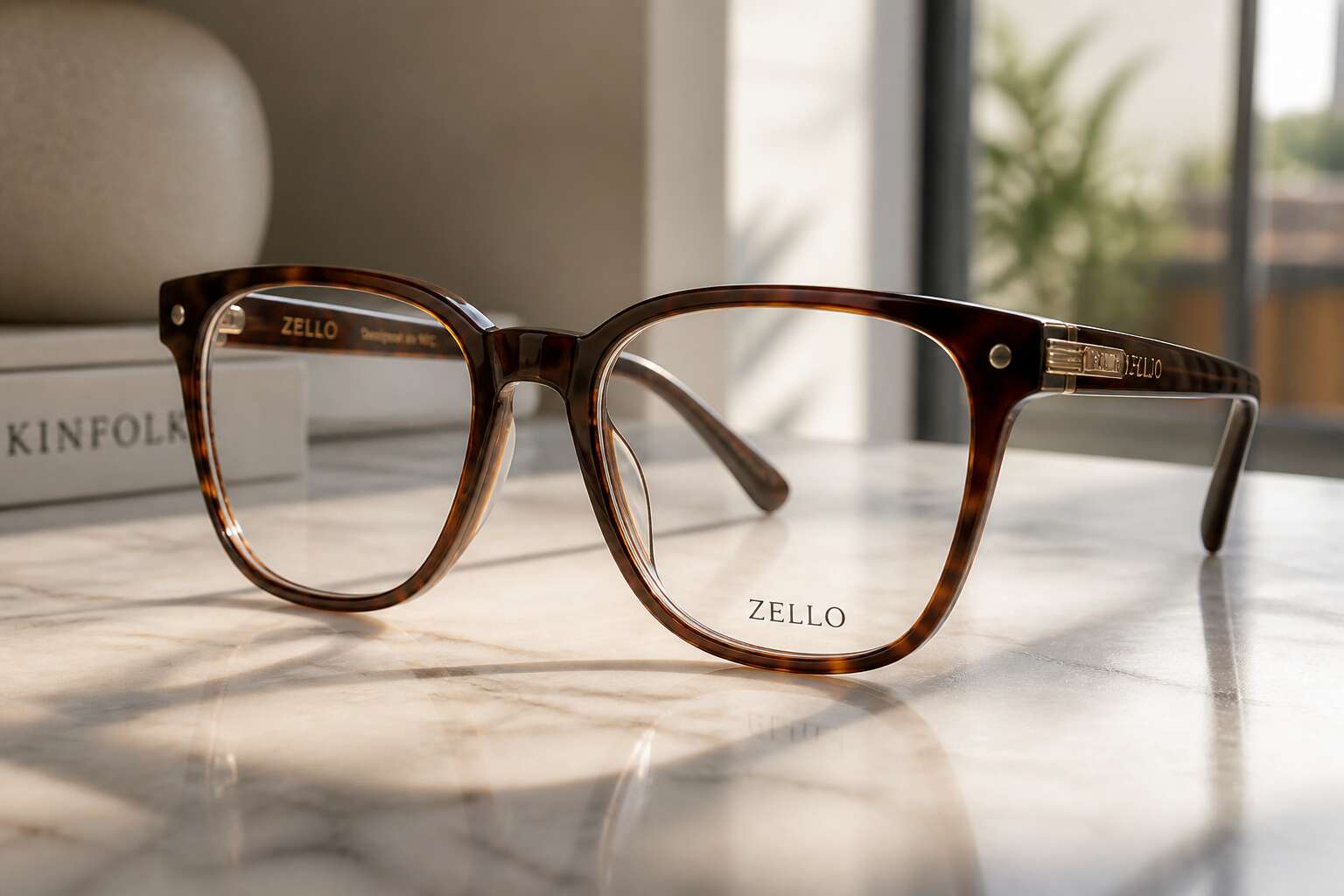
Exploring Modern Prescription Lens Technology
The Evolution of Eyeglass Lenses
Once, eyeglass lenses were simple curves of glass that produced awkward distortions. Today, freeform digital surfacing sculpts each lens pixel by pixel, using wavefront data to correct even tiny aberrations. The result is a fuller field of clear vision, reduced eye strain, and a more natural contrast response.
For those choosing prescription zello glasses, this scientific leap changes the everyday experience. The lenses can be tuned to the curvature of the frame and the wearer’s own gaze patterns. South African professionals who move between sunny outdoor streets and dim office interiors find that these tailored optics reduce the constant refocusing that older lenses demanded.
Digital vs. Analog Lens Surfacing
Every lens begins as a block of raw plastic, but the path from that block to your frame determines what your eyes actually perceive. Traditional analog surfacing relies on physical tools that grind a spherical or toric curve into the back of the lens. These tools are accurate, yet they cannot account for the fact that your eye does not sit perfectly centered behind the frame. They correct the prescription, but they ignore the geometry of the wearer. Digital surfacing, by contrast, uses computer-navigated micro-machining to remove material in precise gradients, freeing the optical designer to prescribe a completely freeform back surface.
For prescription zello glasses, the distinction is immediately tangible. The digital process uses the patient’s pupillary distance, the pantoscopic tilt of the frame, and the vertex distance between the cornea and the lens to create a unique optical model. Analog tools cannot customise for these variables. This makes digital lenses remarkably forgiving for high-index materials, which often suffer from chromatic aberration when produced through traditional methods. The benefit extends to occupational wear: the lower distortion improves peripheral clarity, reducing the subtle nausea that flat-surfaced lenses can induce during rapid head movement.
Consider the qualitative differences that digital surfacing introduces to the visual experience. The following list outlines several advantages that are difficult to argue against:
1. Prescription precision is elevated because the lens is calculated to correct oblique astigmatism, which affects off-center gaze.
2. The peripheral zone of the lens is optimized, so your vision remains stable when you shift your gaze south toward the dashboard or a smartphone.
3. The lens profile is thinner and lighter because the digital algorithm controls edge thickness without compromising the central optical zone.
Analog surfacing remains viable for simple single-vision prescriptions, but it imposes a static geometry that does not match human anatomy. Digital surfacing turns the lens into a bespoke instrument. As a result, the wearer of prescription zello glasses experiences continuity of focus, especially when glancing laterally across the visual field, an act that demands a responsive optical surface.
Blue Light Filtering Options
South Africans spend an average of seven hours a day staring at screens, a figure that climbs with hybrid work. The eye’s natural filters only block ultraviolet, not the high-energy visible blue light emitted by monitors. Modern lens technology addresses this by integrating chromophores into the monomer itself. For prescription zello glasses, this means the entire lens absorbs blue light, not just a reflective coating. That absorption prevents the hazy glare that accompanies cheaper laminates.
We have a few options when selecting filtering strength:
- Clear lenses with a subtle blue-absorbing tint for daytime wear
- Amber-tinted lenses for evening sessions, which reduce melatonin suppression
The substrate approach also preserves contrast, because it filters selectively rather than scattering all wavelengths. Your visual cortex receives a cleaner signal.
Progressive and Bifocal Innovations
Visit any optical studio in Cape Town and the change is obvious. Progressive lenses have moved beyond the thick, heavy compromises of the past. Modern lens designers can now shape the reading corridor to match individual visual habits, reducing the distortion that once made multifocals difficult to wear. For anyone relying on prescription zello glasses, this translates into smoother shifts between reading, screen work, and distance vision.
Bifocals have also seen meaningful updates. Segmented designs use bonded prism technology to soften the line between zones, giving a more seamless appearance while retaining a dedicated near-vision area. The practical benefit is clear; your eyes move naturally across real-world distances without constant refocusing strain.
I have watched these advances reach the South African market quickly, meaning prescription zello glasses now deliver premium lens technology at a more accessible price. The engineering is complex, but the daily experience should feel simple and comfortable.
Selecting the Right Frame for Your Prescription
Frame Materials: Pros and Cons
Any frame you pick for your prescription zello glasses faces UV exposure, humidity, and the occasional drop. Material choice determines survival. Titanium offers strength without the heaviness. Acetate provides colour depth that withstands the Karoo sun. Each material has trade-offs. Titanium bends under stress. Acetate cracks under pressure. Nylon suits active lifestyles but may warp over time.
We weigh these attributes before committing:
– Titanium: light, hypoallergenic, higher cost
– Acetate: vibrant colours, adjustable fit, prone to warping
– Nylon: flexible, impact resistant, fewer style options
Frames fitted with dense, high-index lenses require sturdy rims to hold them in place. Rimless styles reduce weight but demand precise fitting. Material choice ultimately depends on lens thickness, not just appearance.
Shape Recommendations Based on Face Structure
Your face has ignored the frame selection memo. Round faces do not automatically require round frames, a myth propagated by people who sell mirrors. Prescription zello glasses need to work with your bone structure, not against it. Oval faces get the freedom of most shapes. Square faces benefit from curved edges that soften the jaw. Round faces gain structure from rectangular frames. Heart shaped faces suit wider lower rims.
The shape hierarchy goes like this:
- Identify your widest facial feature
- Choose frames that contrast that width
- Ensure the frame width matches your temple span
This is not about aesthetics alone. Ill fitting frames slide down the nose or pinch behind the ears. Prescription zello glasses must balance visual correction with physical comfort. A frame that suits your face structure keeps you from constant adjustment battles.
Durability and Lifestyle Considerations
The moment a frame bends, the correction changes shape. Prescription zello glasses are measured for a precise optical distance; when a temple loosens or the rim drops, that distance is lost. The lenses remain whole, but the sight drifts. A person blames their eyesight when they should blame the frame.
South Africa offers no mercy to a poorly made structure. The heat after midday, the salt of the coast, the dry dust of the interior, they all work on a frame. The routine of daily use weighs more than any catalogue. You need a frame built to carry the decision of how you live, not the hope that you will be careful.
- If you wear a helmet or a hard hat, the frame must tolerate the pressure with no give.
- If you remove your glasses in the middle of conversation, the hinge is the first casualty.
- If you leave them in a hot car, the material becomes the enemy of alignment.
Prescription zello glasses are only as valid as the bones that hold them. The right frame is not a style choice. It is the one that persists through your actual day.
Adjustable and Flexible Hinge Designs
A hinge is the silent contract between you and your frame. In South Africa, a rigid hinge is a promise broken before the first year ends. When you choose prescription zello glasses, the hinge decides how long the optical alignment survives. Flexible hinges absorb the daily violence of being pulled on and off. Adjustable hinges let an optician tune the angle to your face with a small tool. Without both, the frame will fight you.
Selecting the right frame means testing the hinge resistance yourself. A good hinge holds its position under pressure and snaps back without drifting. I have seen flawless lenses fail because the hinge surrendered in the first month.
- Temples that flex outward without shifting the lens axis
- Hinges with replaceable screws for long term service
- Spring tension rated for thousands of cycles
Prescription zello glasses only stay true when the hinge keeps its nerve.
Enhancing Visual Performance with Specialty Coatings
Anti-Reflective and Anti-Glare Solutions
Glare is a measurable problem. A reflected light source can reduce contrast by 20 percent, forcing your eyes to work harder without awareness. Anti-reflective coatings on prescription zello glasses eliminate the problem at surface level, blocking the bounce before it reaches your retina.
The physics matter, but so does the psychology. When your lenses reflect light, your brain receives competing signals. You squint. You tilt your head. You feel tired without a clear cause. Premium coatings use multiple layers of metal oxides, each neutralising a wavelength, giving your visual system a cleaner signal.
Quality coatings address:
- Night driving halos and headlight starbursts
- Contrast reduction in dim or overcast conditions
- Reflection that obscures eye contact during conversation
- Smudge and scratch accumulation
Each layer changes how prescription zello glasses perform in specific environments. Optical interference, the clinical term for this process, influences reading comfort and spatial awareness.
Scratch-Resistant Coating Benefits
A scratch on a lens is more than a blemish; it is a fault line for scattered light. When prescription zello glasses carry a scratch-resistant coating, the lens surface gains a hardness that withstands keys, dust, and repeated wiping. This barrier preserves the precise refractive curve designed for your eyes, ensuring consistent vision over years of heavy use.
In South Africa, where windblown sand and sudden temperature shifts test eyewear daily, that resilience matters. A coated lens also becomes easier to keep clean, since fewer micro abrasions mean less grime accumulates in crevices. You spend less time polishing and more time seeing clearly. The practical payoff is simple: your prescription zello glasses stay dependable, from your morning commute to late evening reading.
UV Protection and Polarized Lenses
South Africa’s UV index routinely hits 11 in summer, which is serious business. Prescription zello glasses with a dedicated UV coating block 100% of UVA and UVB rays. This stops chronic eye strain and long term damage, even from light that reflects off surfaces behind you. Without that layer, your lenses are just tinted glass.
Polarized lenses handle glare from wet roads, car windows, and the ocean. They filter horizontal light waves, so you see contrast instead of a whiteout. The effect is instant, and it makes driving or fishing far less taxing.
- Cut reflected glare on water and asphalt
- Sharpen visual detail in bright conditions
- Reduce eye fatigue during extended outdoor time
Your prescription zello glasses can include both coatings without extra weight. That means everyday comfort and real protection, no matter where the sun finds you.
Oleophobic and Hydrophobic Treatments
Smudges and water spots are the quiet assassins of a clear view. Over a full day outdoors, your lenses collect a film of sunscreen, dust, and salty sea spray. That residue scatters light and forces your eyes to hunt for focus. Specialty coatings solve this before you ever notice the problem.
An oleophobic layer repels the natural oils from your fingertips. Every time you push your frames up your nose, you leave behind a fingerprint. Without this treatment, that print dries into a stubborn smear. A hydrophobic layer, meanwhile, sends water droplets into tight beads that roll right off the surface. A quick shake of your head clears your vision after a sudden Highveld downpour.
– Prescription zello glasses with oleophobic and hydrophobic treatments stay cleaner for longer.
– They simplify maintenance with a quick wipe, no harsh solvents needed.
– They maintain visual acuity even in humid or dusty environments.
The real gain is consistency. Your lenses stay optically true from midday glare to evening drizzle. A constant film of grime degrades contrast and sharpness. These coatings preserve the expensive corrective work inside your lenses. They are a small addition that protects a serious investment. Prescription zello glasses equipped with these treatments simply perform better, minute after minute, without demanding your attention.
Photochromic Lenses for Variable Lighting
The Highveld sun demands decisions before you even step outside. Dark lenses for the midday glare, clear lenses for the conference room, then back again as the clouds roll in. That constant swapping is a distraction. Photochromic lenses remove the choice entirely, shifting their tint based on the immediate UV exposure.
For prescription zello glasses, this adaptive behaviour is more than a party trick. It keeps your eyes working in a consistent state, without the squinting or the sudden flood of light when you remove a pair of sunglasses. The transition is silent, but the effect on your visual stamina is measurable.
– They darken quickly under direct African sun.
– They return to clarity indoors without a fuss.
– They offer a single frame solution for varied days.
The real value lies in the lens chemistry. The molecules rearrange themselves in response to UV, not ambient brightness. This means a car windscreen, which blocks most UV, may leave the lenses lighter than you expect. Understanding this quirk prevents frustration. For prescription zello glasses, selecting a photochromic option requires knowing how you drive and where you spend your afternoons.
The tint shifts are continuous, not step based. There is no noticeable lag in normal use, just a gradual adjustment that keeps your contrast stable. This stability reduces the strain of constantly refocusing after changing environments. Your prescription remains the constant, while the tint handles the variables. It is a straightforward upgrade that changes how your eyes experience a full day.
Navigating Prescription Accuracy and Eye Health
Understanding Your Prescription Numbers
Your prescription numbers are not arbitrary digits. They translate the shape of your eye into a language of lenses. For prescription zello glasses, these values determine how light bends to reach your retina correctly. A sphere value indicates myopia or hyperopia, while cylinder and axis tackle astigmatism.
I have seen patients obsess over clarity while ignoring their pupillary distance. That measurement, called PD, ensures your optical centres align with your pupils. Without it, even the most accurate prescription zello glasses will cause strain.
Consider the key components on your script:
- Sphere (SPH): refers to the lens power needed.
- Cylinder (CYL): corrects astigmatism.
- Axis: the angle of the cylinder.
Each number must pair with a recent eye exam. An outdated prescription forces your eyes to compensate, leading to fatigue and headaches.
Pupillary Distance (PD) and Fitting Essentials
Pupillary distance is an often overlooked number that directly impacts how prescription zello glasses perform. Your PD ensures the optical centre of each lens sits precisely before your pupil. A small mismatch creates a prism effect, forcing your eyes to work harder. This strain compounds over a workday, turning routine tasks into a source of fatigue.
For an accurate fit, verify these measurements during your next eye exam:
– PD in millimetres for distance and near vision
– Vertex distance, the gap between your cornea and the lens
– Pantoscopic tilt, the vertical angle of the frame front
– Frame wrap, especially for sportier zello designs
Each value affects how light travels through prescription zello glasses. Overlooking them compromises the very clarity your prescription promises. When your frames sit unevenly or the lenses sit too far from your eyes, even a correct script falls short. A thorough fitting matters as much as the numbers themselves. Your optician can verify these details in minutes, saving you from weeks of avoidable discomfort.
Regular Eye Exam Recommendations
Prescription accuracy depends on more than the numbers on your script. Eyes change. A script that served you last year may no longer align with your current vision. Regular eye exams catch these shifts before they affect your daily comfort.
The exam should verify both refractive error and the health of your ocular surface. Dry eye, early cataracts, or astigmatism changes can alter how prescription zello glasses perform. Frequency depends on your profile:
- Annual exams for adults over 40
- Two year intervals for younger adults without symptoms
- More frequent checks for diabetics or those with a family history of glaucoma
When your prescription is current, the lenses hold their intended clarity. Stale scripts undermine even the best lens technology. The ordering process for prescription zello glasses should follow a recent exam.
Signs You Need an Updated Prescription
Squinting at street signs in Johannesburg traffic or tilting your head to read a menu are warning signs. Your script no longer matches what your eyes need. When prescription zello glasses are built around outdated numbers, lenses amplify visual stress instead of resolving it.
I see it in how your eyes respond to screen work. Burning sensations, tension around the temples, or persistent eye rubbing point to a prescription that has drifted from reality. Night driving tells a similar story. Halos around oncoming headlights or difficulty judging distance at dusk often emerge before the refractive error becomes obvious.
- Recurring headaches that settle only when you remove your glasses
- Blurry near vision that forces you to extend your arm further
- A sudden preference for brighter screen settings
These signs mean prescription zello glasses need a reassessment. Your eyes communicate strain through small changes, discomfort becomes routine when those signals go ignored.
Care and Maintenance for Long-Lasting Eyewear
Cleaning Techniques That Prevent Damage
Most people clean their lenses with a shirt tail and a quick exhale of warm breath. That habit grinds microscopic debris into the lens coatings, dulling clarity within months.
Proper cleaning begins with a lukewarm rinse to wash away grit. A single drop of pH-neutral washing-up liquid, massaged gently across the lens with your fingertips, lifts oils and dust without stressing the coating. Rinse again, then dry with a dedicated microfibre cloth. Never a paper towel!
The most common culprits behind premature coating failure:
- Microfibre cloths washed with fabric softener
- Alcohol-based sanitisers that dissolve anti-reflective layers
- Hot water that distorts acetate frames
Prescription zello glasses are precision instruments. Handle them with deliberate patience, and the clarity they provide will remain intact for the life of the frame. A few moments of care each morning preserve the investment you made in your vision.
Proper Storage Solutions
An optometrist once told me that the most common cause of broken frames isn’t impact, but the sofa cushion. That rings true. Prescription zello glasses often meet their end under a throw pillow or a sleeping dog. The solution begins with a simple ritual: a dedicated storage spot.
Hard cases beat soft pouches every time. A rigid shell protects against pressure and accidental drops. For prescription zello glasses, the case is as crucial as the lens prescription itself. Avoid leaving them on car dashboards, where heat warps acetate and stress cracks can form.
- Never store glasses lens-down, as that invites scratches.
- Never leave them in a bathroom, where humidity attacks coatings.
- Never hang them from a shirt collar, a sure recipe for bent hinges.
When you do put them away, fold the left temple first, then the right. This keeps the frame balanced and reduces stress on the hinge mechanism. A few seconds of care prevents months of headache.
When to Adjust Frame Alignment
The hinge loosens before you notice. Your prescription zello glasses sit crooked on your nose, and you blame the lens. Alignment is a maintenance event, not an aesthetic one. The frame slips after a head tilt, or one temple floats above the ear. A flat surface reveals the truth: if they rock, the geometry is off.
When alignment shifts, the evidence appears in specific places:
- Uneven pressure from the nose pads
- A visible twist in the bridge
- Hinge squeak during adjustment
For prescription zello glasses, delayed correction concentrates stress on one hinge, bending the metal permanently. Temperature shifts alter acetate memory, so seasonal changes bring a new set of alignment demands.
Replacing Nose Pads and Temples
The same seasonal shifts that disrupt alignment accelerate wear on the components your face touches daily. Nose pads absorb oils and pressure, yellowing and hardening until they can no longer distribute weight. Temple tips crack behind the ear after months of sun exposure. When these parts fail, the entire frame compensates incorrectly.
Many wearers postpone replacement because the cost seems trivial against the price of the glasses. Trust me, this is a mistake. A hardened pad forces your prescription zello glasses to sit unevenly, compounding the stress that already bends hinges.
Watch for these telltale signals:
- A pad that refuses to sit flush against your nose
- Temple tips that have lost their grip
- Surfaces that turn sticky or develop rough edges
Replacing these small parts is what keeps your prescription zello glasses stable for years. Ignore it, and the frame wears out long before the lenses do.


0 Comments