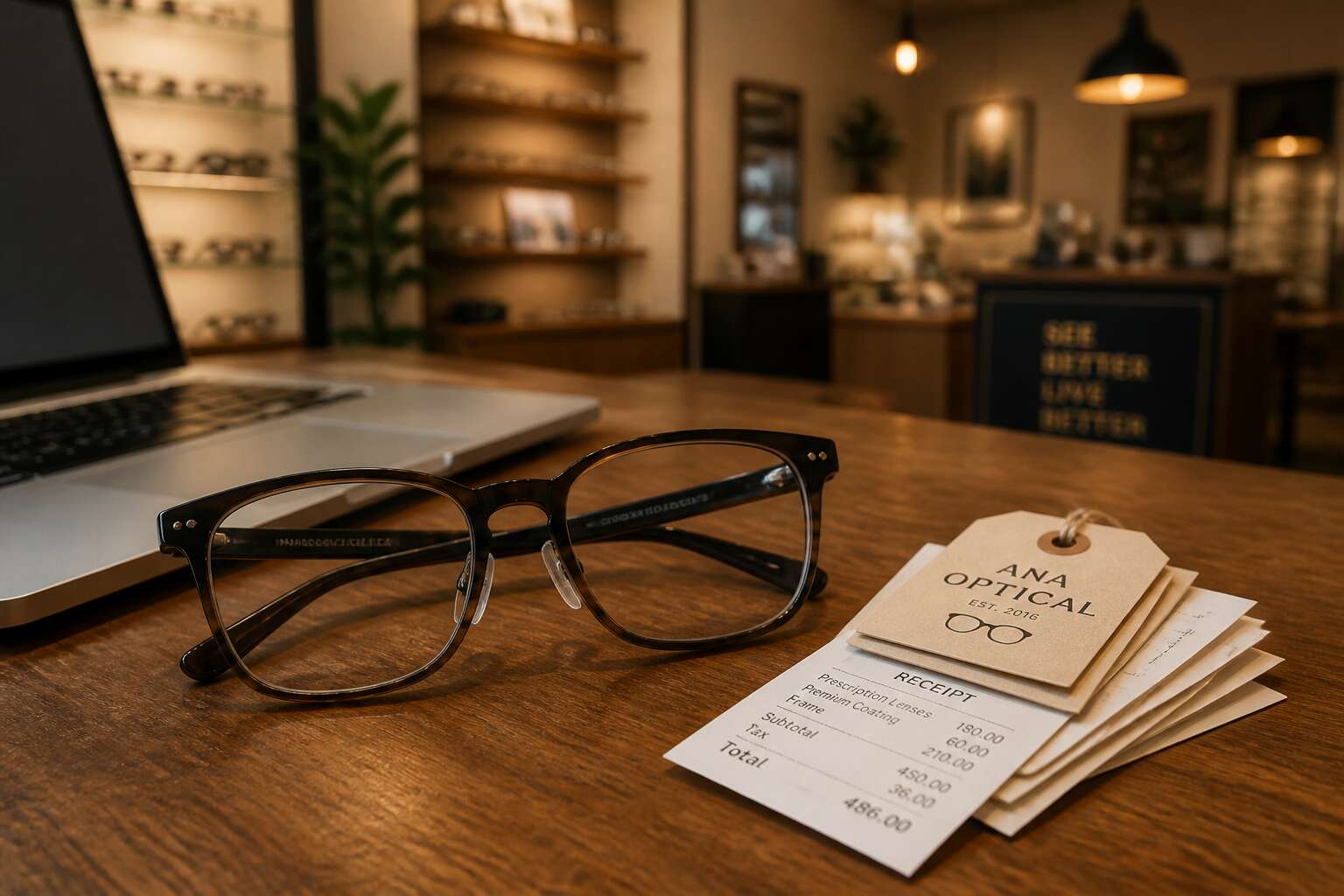
Where to Find Affordable Prescription Eyewear
Online Retailers Offering Budget Lenses
One in three South Africans avoid buying prescription glasses without insurance due to upfront costs. Online retailers flip that script by selling budget lenses directly to your door. Zenni Optical and EyeBuyDirect ship to South Africa, with single-vision pairs starting near R250. I have used both, and the savings come from skipping the optical shop’s overhead.
For local options, Optical 24 and Lenskart offer frequent discounts on frame and lens bundles. Before you pay, double-check the pupillary distance on your prescription.
- International shipping fees vary widely
- Anti-reflective coating often costs extra
- Virtual try-on tools reduce fit mistakes
Warehouse Clubs and Big-Box Store Optical Centers
Warehouse clubs and big-box store optical centers offer prices that undercut independent opticians by as much as forty percent. They carry the clinical reliability of a traditional optometrist, yet their pricing resembles the online retailers discussed earlier. At Makro or Game, a dispensing optician measures your pupillary distance and adjusts the frame you pick. That hands-on service matters when you are buying prescription glasses without insurance.
The trade-off is inventory. These counters stock a limited range, dominated by generic frames and standard index lenses. Designer names and advanced coatings are absent. What you get instead is a transparent price list and a warranty.
- Ask for last season’s frames, often discounted heavily.
- Verify the lens index matches your prescription.
- Confirm the warranty covers frame breakage, not just manufacturing defects.
I have used this route for a spare pair. The experience lacks the ceremony of a dedicated optical shop, but the final price delivered a relief no interior decor could match!
Mail-Order and Wholesale Eyewear Companies
Mail-order and wholesale eyewear companies remove the optical shop from the buying process. They sell frames and lenses from warehouses in Gauteng or offices in Cape Town, with no showroom and no optometrist. For prescription glasses without insurance, you must have your prescription and pupillary distance measured by a professional beforehand.
The savings exist because you handle the logistics yourself. You measure, you order, you wait for a courier. The price can be half of a retail counter. You might receive a frame that fits correctly, or one that sits lopsided and needs adjustment elsewhere.
- Check the return policy for incorrect prescriptions or damaged deliveries.
- Confirm whether the company covers frame adjustments done elsewhere.
- Ask for the lens index certificate and a warranty against coating peeling.
Many wholesale suppliers run the same factories that feed the large retail chains. You skip the shop floor and the sales commission. Patience is necessary because shipping times follow their schedule, not yours. For prescription glasses without insurance, that trade usually favours the bank balance.
Local Opticians and Independent Shops
Independent opticians have more control over their pricing than a chain store. For anyone seeking prescription glasses without insurance, that control creates negotiation space. Local practices buy frames in smaller batches, but they sell with fewer overheads and no regional marketing budget. I have seen shoppers pay half the quoted price.
Ask to see discontinued models. These frames sit in storage, and most optometrists will clear them at a fraction of the original price. Mention that you are paying without medical aid, and many will trim fitting fees or lens upgrades. That gesture can save you hundreds of rand!
- Request a written itemised quote before you commit
- Ask about cash discounts and lay-by options
- Confirm whether adjustments are free
When you buy from an independent practitioner, the person who measures your pupils also stands behind the warranty. For prescription glasses without insurance, that accountability is worth something.
Smart Ways to Lower the Cost of Frames and Lenses
Choosing Durable Yet Inexpensive Frame Materials
The Durban humidity snaps cheap plastic frames. Coastal salt air corrodes metal hinges. For prescription glasses without insurance, material choice determines how often you return to the optometrist. A frame should survive two years of daily wear without bending out of shape.
Nylon-based TR90 frames flex under pressure and return to their original form. Acetate holds up better in the dry inland heat of Johannesburg. I have watched low-cost steel frames rust at the hinge within eight months. The frame material must match your environment.
Consider these options:
– Polycarbonate for strength and light weight
– Propionate for flexibility and hypoallergenic comfort
– Cellulose acetate for heat resistance and colour stability
Local South African acetate frames often outlast imported designer versions. The price difference is brand markup. Better lens coatings deliver more visual benefit than a fancy frame name. That is where your money should go.
Skipping Unnecessary Lens Upgrades and Coatings
The optical industry earns its largest margins on lens coatings, not the lenses themselves. A premium anti-reflective package can add R800 to glasses that cost R300 to produce. For South Africans buying prescription glasses without insurance, that markup stings.
Standard lenses already block 100% of UVB and most UVA. The extra blue light filter? Sunlight contains more blue light than any screen. The scratch-resistant coating? Most budget lenses include it free.
What actually matters in lens selection:
- Your prescription accuracy, not the lens brand
- Lens index matched to your prescription strength
- A basic anti-reflective layer if you drive at night
Everything else is a commission generator. Skip the photochromic transition if you work indoors. Avoid polarised unless you fish daily. When you buy prescription glasses without insurance, every skipped upgrade is a direct saving.
Understanding Single Vision Versus Progressive Lens Pricing
The price gap between single vision and progressive lenses in South Africa routinely exceeds R1,800. That gap reflects design complexity, not material cost. For anyone securing prescription glasses without insurance, understanding this distinction prevents overpayment.
Single vision lenses correct one focal length. Their optical geometry stays straightforward, so manufacturing costs remain low. Progressive lenses contain a corridor of changing power. Fitting demands exact pupillary distance and segment height measurements. Those extra clinical minutes inflate the quote!
I have watched this premium confuse shoppers. Progressive pricing includes a design element that single vision avoids entirely. Two single vision pairs, one for distance and one for reading, often cost less than one progressive pair. This structure benefits those buying prescription glasses without insurance because the premium adds no corrective advantage for many wearers.
Pricing factors worth attention:
- Lens material choice affects the final figure
- Frame curvature influences progressive lens cost
- Provincial laboratory fees vary noticeably
Keeping Your Existing Frames and Ordering New Lenses Only
Here is a truth that will save you a fortune: your current frames are not your enemies. They are merely the vessel. The optical industry, in its infinite wisdom, has conditioned us to believe that a new prescription demands a complete overhaul of your facial furniture. That is a costly fallacy, particularly for anyone seeking prescription glasses without insurance. The frame is a static shell. The lens is where the science lives. If your existing pair still sits comfortably on your nose without pinching your temples like a vice, you are holding a golden ticket to significant savings.
The process is brutally simple. You walk into a store, you hand over your existing spectacles, and you request a lens replacement. The laboratory will grind your new prescription to fit the old grooves. This manoeuvre sidesteps the retail markup on new acetate and titanium, which often carries a margin that would make a diamond merchant blush. Your optometrist still performs the essential measurements, such as pupillary distance and segment height, but the cost of the physical frame is removed from the equation entirely.
Consider the typical financial breakdown:
– New designer frame: R1,500 to R4,000
– Lens replacement in your own frame: R400 to R1,200 for standard single vision
– Reusing frames for progressive lenses: Saves the frame cost, leaving only the design premium
That disparity is the difference between a sensible transaction and a luxury purchase. Many South African optical chains will happily replace lenses in a frame purchased elsewhere, though a few might grumble about liability. Find a lab that focuses on the work, not the retail theatre. Before you commit, check the hinges and the coating of your old pair. If the frame is warped or the arms are cracked, this route becomes a fool’s errand. But for the majority, it is the most efficient way to stretch your budget when buying prescription glasses without insurance, allowing you to allocate funds towards higher index materials instead of superficial branding.
Taking Advantage of Package Deals and Two-for-One Offers
Let me save you from a common trap. Basking in the glow of a two for one spectacle promotion feels like a victory, but only if you actually need two pairs. I often see people in South Africa walk out with a second pair they never wear, just because the deal promised value. That is not value. That is a retailer moving inventory.
Instead, ask the optical chain to split the deal. Some stores will apply the second pair discount to one higher spec order, or let you upgrade your lenses. You can also check if the package includes standard single vision only. If your prescription is complex, the advertised price will evaporate. Hunt for bundles that cover the complete cost, including the dreaded lens thinning.
- Request a quote that lists frame and lens costs separately
- Ask if the promotion applies to the total order or just the frame
- Use the second pair for prescription sunglasses or a spare for the car
The hard truth for anyone buying prescription glasses without insurance is that a two for one offer only helps if the second pair holds real utility. I have paid for a backup pair purely to justify the deal, then watched it collect dust. Better to negotiate a straight ten percent discount on one pair, or a free anti reflective coating, which costs the store very little.
Discount Programs and Financial Assistance for Vision Care
Vision Discount Plans Versus Traditional Insurance
When annual premiums climb and benefits shrink, the gap between needing corrective lenses and affording them widens. Vision discount plans offer a different proposition entirely. They operate as subscription memberships, providing negotiated rates rather than reimbursements. You pay a fixed fee upfront and receive substantial reductions on eye examinations and lens purchases at a network of optometrists and optical dispensaries across South Africa.
Traditional insurance, by contrast, covers a portion of costs after a claim, often with waiting periods and exclusions. Discount plans bypass those administrative hurdles. For someone who simply needs prescription glasses without insurance, the calculus often favours the discount route. The tradeoff is scope: insurers may pay for emergencies or complex procedures, while discount plans focus solely on routine optical care. Knowing which model aligns with your actual usage makes the difference between genuine savings and a wasted monthly debit.
Employer Wellness Benefits and Health Savings Accounts
The quiet power of employer wellness benefits often goes unnoticed until the moment you stare down the cost of corrective lenses. South African workplaces increasingly fold optical care into their employee packages, offering subsidised eye tests or corporate vouchers for frame purchases. Dig through your HR handbook; the solution to prescription glasses without insurance may already sit in a benefits folder you have never opened.
Health savings accounts, known locally as medical savings accounts, hold a similar promise. Contributions accumulate tax-free, and withdrawals for optometry visits or lens purchases are legitimate expenses. Pair this with employer discount programmes and the financial weight of clear sight lifts considerably.
– Subsidised annual eye examinations
– Optical vouchers through corporate wellness plans
– Flexible savings allocations for prescription lens purchases
Each option redirects the burden, letting you see clearly without the insurance premium’s shadow.
Nonprofit Eye Care Charities and Community Programs
In South Africa, the cost of clear sight often feels like a heavy expense. Yet nonprofit eye care charities and community programs offer relief that many never discover. Organisations like these provide subsidised eye tests and donated frames, sometimes through mobile clinics that reach townships and rural areas.
Discount programs through civic groups and faith based networks also negotiate reduced rates with local optometrists. A patient can secure a prescription glasses without insurance solution for a fraction of the retail price. Consider what these programs typically provide:
- Free or reduced eye screening events
- Recycled or donated spectacle frames
- Referrals to low cost lens laboratories
Some charities partner directly with optical suppliers to distribute vouchers. Others maintain waiting lists for specialised prescriptions. Application processes vary, but the principle stays constant: money should never determine whether you see the world clearly.
Flexible Spending Accounts for Eyeglass Expenses
Employer sponsored discount programs often remain an overlooked resource for vision care. Some South African companies negotiate preferential rates with optical chains, then pass those savings to staff. Membership organisations and affinity groups may offer similar arrangements. These programs do not function like insurance. They simply reduce the final price.
A flexible spending account, or medical savings account, changes how you pay. You allocate pre-tax income toward future eye care. That money covers eye tests and frames. It can pay for prescription glasses without insurance entirely.
Consider what these accounts allow:
– Pre-tax contributions from your salary
– Reimbursement for approved vision expenses
– Immediate access to funds for eyewear purchases
Many people underestimate how much these two options soften the cost of clear sight.
Student and Teacher Vision Discounts
Students and teachers in South Africa often face a particular squeeze. Their incomes rarely stretch to cover vision care. Yet many optical chains and independent practitioners offer dedicated discounts for these roles. Some require a valid student card or staff number. Others partner with unions or education departments to provide reduced rates on eye tests and frames. These savings are not insurance. They are price reductions. Still, they can turn prescription glasses without insurance into a realistic purchase.
- Does the discount apply to lenses?
- Is a student number required?
- Can you combine it with other offers?
Ask about education pricing before you book an appointment. Check whether the discount applies to lenses or only to frames. Sometimes the offer covers both. Also look into bursary funds from universities or professional bodies. These funds occasionally assist with essential eyewear.
Government Assistance for Low-Income Families
In South Africa, public health facilities provide a different route to eyewear. Government hospitals and clinics run ophthalmology departments that examine eyes for a nominal fee, or sometimes at no cost for those on certain social grants. These state facilities can issue a prescription for glasses without insurance, and the in-house optical unit often supplies basic frames at a reduced rate. The system moves slowly. Waiting lists can stretch for months. Still, for low-income families, it remains the most dependable option.
Provincial health departments also run outreach programs in underserved areas. These mobile units test vision and distribute basic spectacles. Qualifying criteria vary by province, so social workers or clinic staff can confirm what documentation applicants need.
How to Save on Eye Exams Without Coverage
Low-Cost Walk-In Eye Exam Clinics
Eye exams often feel like a luxury when you need prescription glasses without insurance. Yet a growing number of walk in clinics across South Africa offer affordable vision checks. These facilities operate on a sliding scale or flat fee. You can find them in community health centres, university optometry schools, and mobile units. Some even provide same day appointments, which saves time and money.
- A consultation that includes a refraction test.
- Extra charges for pupil dilation.
- A written prescription covered by the fee.
These details prevent surprise costs. Clinics with transparent pricing are easier to trust.
Promotional Exam Deals at Retail Optical Centers
Retail optical chains in South Africa treat eye exams as a loss leader. They advertise free or reduced price vision tests to pull customers through the door. The catch is that you typically need to buy prescription glasses without insurance from that same store to qualify. If you already have a current prescription, you can skip the exam and head straight to the frame selection!
These promotions shift throughout the year. January brings back to school family deals. Winter months might pair an exam with a discounted lens upgrade. Ask about the fine print before booking. Some locations waive the exam fee only when you spend above a certain amount, which still beats paying full price for prescription glasses without insurance.
- Confirm the promotional exam fee before scheduling
- Ask if the fee is waived with frame purchase
- Verify whether the written prescription is yours to keep
Telehealth Options for Renewing Prescriptions
Telehealth has quietly revolutionised how South Africans manage their eye care renewals. A virtual consultation can confirm whether your current prescription remains accurate, without the waiting room ordeal. This saves both time and transport costs, which often eclipse the consultation fee itself. Many telehealth providers forward the updated script directly to your phone, letting you purchase prescription glasses without insurance from an online retailer or independent optician with minimal friction.
For routine renewals, remote assessments are remarkably efficient. However, they cannot replace a full clinical examination for first-time prescriptions or suspected pathology. The practitioner cannot inspect the internal structure of your eye through a screen.
- Verify the platform is registered with the Health Professions Council of South Africa
- Confirm the doctor issues a signed prescription valid for optical dispensing
- Ask about the validity period, since some scripts expire within six months
Consultation fees typically range from R150 to R350, considerably less than a comprehensive in-store exam. Pair that with budget-friendly frames, and you have a complete route to prescription glasses without insurance, all from your couch.
University Optometry School Clinics
University optometry school clinics remain one of South Africa’s best kept secrets for affordable eye care. Final year students must complete hundreds of supervised clinical hours before graduation, which means the public can access thorough examinations at a fraction of typical retail prices. A comprehensive test at these clinics often costs between R100 and R250.
The trade off is time. Exams take longer because qualified supervisors verify every step of the process. You still receive a detailed assessment and a signed prescription. That script lets you source prescription glasses without insurance from any retailer, online or physical.
- Contact the optometry department at your local university for clinic schedules
- Ask whether retinal imaging is included in the exam fee
- Confirm the prescription is valid for optical dispensing before you leave
Waitlists can stretch for weeks, so book early and treat the savings as your reward for planning ahead.
Community Health Centers Offering Sliding Scale Fees
Community health centres across South Africa offer eye exams on a sliding scale. Your fee depends on your monthly earnings, which means those with less can pay dramatically less. Many people overlook these facilities, assuming they only handle general medicine. Yet they often employ optometrists who provide full examinations. You receive a proper script without any retail upsell. That script is your ticket to prescription glasses without insurance.
Bring a payslip or an affidavit of income to your first visit. The administrative process is quick. Some centres even partner with eyewear suppliers to provide budget frames and lenses. An exam might cost anywhere from R80 to R220. When you are paying out of pocket, every rand counts. This option keeps more money in your pocket for the actual glasses.
Navigating Prescription Portability and Buying Smart
How to Get Your Prescription After an Exam
Many people assume the optometrist owns your prescription. In South Africa, that is not the case. You paid for the examination, so the prescription belongs to you. When you buy prescription glasses without insurance, this document lets you compare prices across suppliers.
After your eye exam, ask for a written copy before leaving. It should include the sphere, cylinder, axis, and pupillary distance. Some practices hesitate, especially if they suspect you will buy elsewhere. Remind them that the Health Professions Council of South Africa requires them to release your prescription.
- Verify your name and date of birth
- Confirm the examination date, since most prescriptions last two years
- Request pupillary distance if missing
Keep the paper safe but also photograph it with your phone. Many South African online retailers accept a clear photo during checkout. This is a useful safeguard when navigating prescription glasses without insurance, allowing you to revisit options months later without another exam.
Measuring Pupillary Distance Yourself
The prescription in your hand loses power if the numbers fade from memory. Portability means the document works beyond the practice that issued it. When you buy prescription glasses without insurance, the same paper can serve different retailers, online stores, and direct labs. You control where the order lands.
Pupillary distance, or PD, often gets omitted from written prescriptions. The optometrist measures it during your exam, but the value may not appear on the paper. You can measure it yourself with a millimeter ruler and a mirror.
Here is a straightforward method:
- Stand about 20 cm from a mirror, holding the ruler against your brow.
- Close your right eye and align the zero mark with the center of your left pupil.
- Open your right eye, close the left, and read the millimeter value at the center of the right pupil.
Repeat twice to confirm. Small errors matter, so measure carefully. A correct PD keeps your prescription glasses without insurance effective for daily wear.
What to Know About Online Lens Customization
Your prescription travels with you. In South Africa, the same piece of paper works at a high-end Johannesburg dispensary or a budget online store. Prescription glasses without insurance depend on this portability. The optometrist who examined you may prefer that you purchase in the attached shop, but the document is yours. You can take those numbers and order from whoever offers the best deal.
Online lens customization shifts the decision process. You choose the index, coatings, and lens design from a screen. Some choices carry real weight. High-index lenses reduce thickness for strong prescriptions. A coloured tint is a personal preference.
- Confirm the prescription expiry date first
- Take a fresh PD measurement
- Compare lens package details across retailers
That simple checklist prevents the classic error of ordering a lovely frame and a mismatched lens. Prescription glasses without insurance become a controlled exercise, not a gamble.
Tips for Getting the Best Fit Without Trying On Frames
Your prescription is a passport, not a loyalty card. Prescription glasses without insurance depend on that portability. The same numbers that satisfied a Sandton optometrist will satisfy a budget online store, provided you take the document with you.
Buying frames without trying them on requires a different kind of diligence. The temple arm carries three numbers: lens width, bridge width, and arm length. Compare them against a pair that fits you comfortably today. That single habit prevents the sorrow of a handsome frame that slides down your nose by noon.
- Measure your current frames with a ruler
- Match the bridge width to your nose shape
- Confirm the total frame width suits your face
Virtual try-on tools are entertaining, but they flatter. Your own measurements are the honest mirror. Prescription glasses without insurance ask you to be your own optician, a role that becomes manageable when the numbers are on your side.


0 Comments