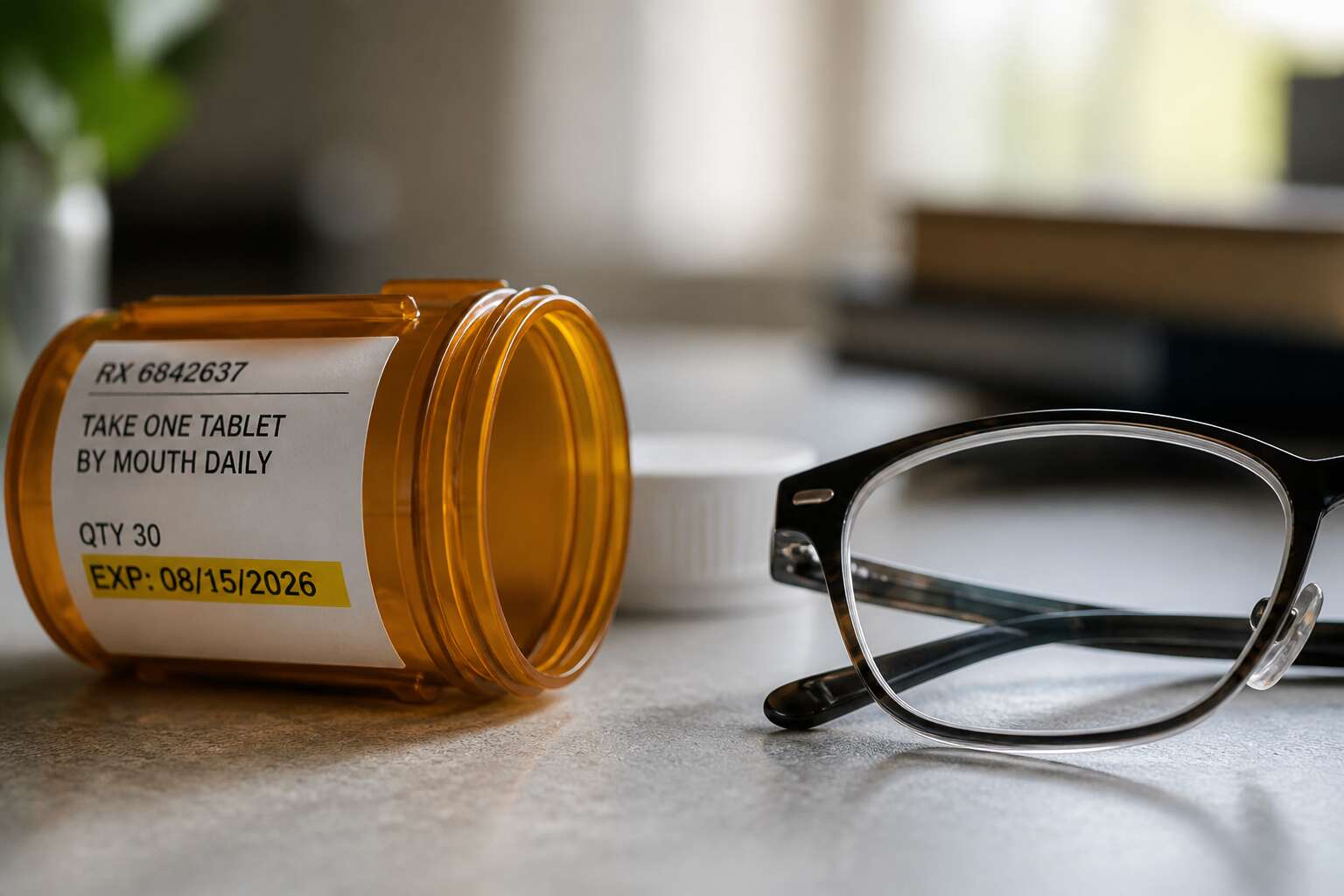
Signs Your Eyewear Prescription Has Changed
Frequent Headaches and Eye Strain After Short Screen Time
The telltale throb behind your eyes after just twenty minutes of screen time is your visual system sending an urgent message. When your prescription glasses expired, the effort of focusing increases noticeably. Your ciliary muscles clench hour after hour, and what used to be effortless viewing becomes a constant struggle with blur.
- Throbbing pain around the temples after short email sessions
- Burning or watering eyes that force you to look away
- Blurred text that sharpens only after repeated squinting
This strain builds quietly. The headache you feel at lunchtime is not exhaustion. It comes from wearing lenses that no longer match your current visual demands. If a brief glance at your phone leaves your brow heavy and your focus scattered, your eyewear is no longer up to the task.
Squinting or Blurred Vision at Both Near and Far Distances
One might be forgiven for assuming that squinting is a natural part of the ageing process, a habit we adopt as our eyes tire. In reality, it is the first, most obvious admission that your prescription glasses expired some time ago. When clarity becomes a negotiation, you are no longer wearing lenses that serve you; you are wearing a workaround. The world refuses to snap into focus, and your eyes spend every waking moment trying to compensate for a deficiency that should have been corrected long ago.
The problem is seldom isolated to a single distance. A menu at arm’s length is a blur, yet the road signs ahead lose their crispness as well. This dual failure is a telling symptom that your prescription should have evolved with your vision.
– You find yourself leaning forward to read labels on grocery shelves.
– Your gaze drifts to the floor when walking, because the signs above you are indistinct.
– You prefer to sit closer to the television, not for sound, but for definition.
Each of these tactics is a quiet concession to your eyewear’s shortcomings. The charming squint, which others mistake for deep thought, is actually a constant, unconscious effort to sharpen a world that your glasses no longer clarify. It is a different kind of fatigue, one that stems from your eyes refusing to accept the image they are given. The habit is so gradual that you seldom notice when it begins, yet it is one of the most reliable indicators that your prescription glasses expired and your visual field is now a compromise. You might even find yourself holding a newspaper at an awkward angle in good light, experimenting to find the one position where the letters finally stop their dance. This experimentation is not a solution. It is a daily routine that confirms your current pair is simply a placeholder for a pair that actually works.
Noticeable Shift in Balance or Depth Perception
We trust our feet to keep us upright, yet balance begins with the eyes. When the brain receives mismatched signals from each lens, the world becomes misleading. This is a quiet consequence of wearing prescription glasses expired months ago.
You may find yourself hesitating at the top of a staircase or reaching for a countertop that sits further away than it appears. These errors point to a depth perception shift. The floor seems closer or further than it really is, and everyday movements lose confidence.
- You stumble on level ground without visible obstacles.
- You pour water and misjudge the glass’s rim.
- You feel dizzy after looking up or switching focus quickly.
Your prescription keeps your world stable. When it lapses, your feet feel the difference. In my case, the pavement at my front gate seemed to rise toward me. That was my sign that prescription glasses expired and needed replacing.
Relying on Reading Glasses That No Longer Feel Sharp
Relying on reading glasses that no longer feel sharp is a quiet betrayal. The letters on a medicine bottle seem to waver before settling, and you catch yourself tilting the page toward the window just to coax meaning from the ink. You clean the lenses out of habit, blaming smudges, yet the ghosting stays. That is not a cleaning issue. The prescription glasses expired months ago, and your eyes have been compensating ever since.
I knew something had changed when I started reading with my phone’s camera instead of my own eyes. I would hold the phone above a menu, zoom in, and read from the screen. That is not convenience. That is avoidance. Reading glasses should restore effortless vision, not demand negotiation. When they stop delivering sharpness, the ritual becomes a struggle:
- You push the glasses up your nose repeatedly, as if shifting them will change the focus.
- You remove them entirely for close work, and your eyes ache with the effort.
- You choose larger print at restaurants, even when the lighting is bright enough to help.
Each habit points to the same truth. Your reading glasses are no longer aligned with your eyes. The prescription glasses expired, and the text you once took for granted now costs you attention and energy.
Comparing Old and New Vision Test Results
When you place your old and new vision test results beside each other, the differences appear negligible. A quarter diopter here, a slight axis rotation there. Those fractions carry meaning. Your eyes have drifted from the baseline that once produced crisp images. The prescription glasses expired in a clinical sense even when the frames still feel comfortable. The new examination confirms what your daily perception already hints at: correction that was accurate eighteen months ago now misses the mark.
- Sphere adjustments beyond half a diopter change focal depth.
- Cylinder changes alter how light lands on the retina.
- Axis rotations of even five degrees skew horizontal and vertical lines.
Each measurement compounds with the others. The old document is a historical record, not a working guide. The new results show where your eyes actually stand today.
Risks of Continuing to Wear Outdated Lenses
How Incorrect Lens Strength Affects Daily Safety
At 60 kilometres per hour, a car covers more than sixteen metres each second. If your prescription glasses expired a year ago, your reaction to a pedestrian or a traffic light may be delayed by a critical fraction. Glare from oncoming headlights becomes harder to filter, and your eyes may take longer to refocus after checking the rearview mirror.
Think about the ordinary movements that depend on accurate sight:
– Stepping off a curb into moving traffic
– Reversing into a parking bay near shopping trolleys
– Crossing a residential street while children play nearby
These tasks leave no room for slow reactions. A lens that suited your vision last year cannot keep up with the physical changes in your eye. The difference between what you see and what is actually there grows with every passing month. That difference is where collisions occur.
Long-Term Impact on Posture and Neck Health
When your prescription glasses expired, your eyes start working overtime. You lean closer to screens, tilt your head to find a clearer angle, and hunch your shoulders without noticing. This contortion does not stay in the moment. It becomes a daily posture you carry into every task.
The cervical spine supports roughly five kilograms of head weight. Each forward tilt multiplies that load. Outdated lenses quietly push your head further forward as the blur grows, and the neck muscles lengthen and weaken in response.
- Persistent tightness at the base of the skull
- A dull ache between the shoulder blades
- Conscious effort required to turn the head
These signals rarely appear all at once. They build slowly and are easy to dismiss, until reversing a car or checking a blind spot feels genuinely difficult.
Why Digital Eye Fatigue Worsens With an Old Rx
Your prescription glasses expired the moment your eyes shifted, even if the change feels subtle. Wearing them now means your visual system spends extra energy correcting a distortion that no longer matches reality. This silent compensation drains your focus reserves before lunch, and screens bear the brunt of it.
Digital eye fatigue worsens with an old Rx because a screen’s pixel pattern demands precise focus. A dated lens leaves your eyes hunting for the sharp edge of every character. The result is a heavy, gritty sensation that settles in after only twenty minutes of work. It is not the occasional strain you can shrug off; it is a persistent pull on your attention.
- Your eyes refocus repeatedly on the same line of text.
- The screen’s brightness starts to feel aggressive.
- You catch yourself leaning closer without noticing.
These micro-adjustments are invisible but costly. Over weeks, they reshape how you work. That is the real risk of ignoring the expiry date on your lenses.
Potential to Mask Underlying Eye Health Conditions
An outdated pair of spectacles does more than muddy the morning commute. It quietly rewrites your vision story. When prescription glasses expired months ago are still on your nose, the brain accepts a distorted image as truth. That acceptance is where the trouble begins. It offers a perfect alibi for genuine disease. Glaucoma rarely announces itself with pain. It simply narrows your world, and the old lens takes the blame. Cataracts mute colour and contrast like a smudged lens. Macular degeneration bends straight lines, and you may thank your scratched coating rather than investigate.
This is the sleight of hand nobody discusses. The eye examination is the only place these conditions lose their disguise. Wearing prescription glasses expired beyond their useful life does not merely inconvenience you. It hands a head start to problems far easier to treat when small.
How to Know When It’s Time for a New Eye Exam
General Timeframe for Vision Changes in Adults
Your eyes do not announce the day your lenses lose their magic. For most South African adults, the optometrist’s chair should become familiar every two years. Yet the silent shift often arrives before that cycle completes. Around age forty, the crystalline lens stiffens, a process called presbyopia, and the distance between clarity and blur shrinks rapidly. That’s when a prescription glasses expired scenario reveals itself most cruelly. You hold a menu further away. You tilt your head to read road signs. The general timeframe may suggest biannual visits, but consider these warning intervals:
- Under forty with stable vision, revisit in twenty four months.
- Forty to sixty, expect changes every twelve to eighteen months.
- Above sixty, annual exams are non negotiable.
Each of these periods offers a chance to catch deterioration before a prescription glasses expired reality forces an emergency sprint to the optometrist.
Special Considerations for Children and Teens
Children do not follow adult timelines for vision change. Their eyes develop rapidly, often without obvious warning signs. A prescription glasses expired situation in a teenager frequently appears as a sudden drop in school performance. The child who loved reading now avoids books. The netball star starts missing catches. Parents blame attitude, screens, or hormones. The real culprit is usually an outdated lens.
- Complaints that letters on the board “move” or “jump”
- Sitting closer to the television than the couch cushions
- Rubbing eyes repeatedly despite no allergies present
Teenagers face an additional complication. The pressure of matric exams means an outdated prescription can sabotage months of preparation. A prescription glasses expired scenario during final exams creates unnecessary stress. Young eyes rarely report their own problems either. They assume everyone sees the same blur they do.
Medical Conditions That Speed Up Prescription Shifts
Your blood sugar can rewrite your prescription in a single week. Diabetes shifts fluid inside the lens, bending light differently as glucose levels rise and fall. A prescription glasses expired scenario becomes obvious when blur appears and disappears depending on the time of day.
Cataracts change lens density at an unpredictable pace. Thyroid disorders tug at the muscles behind the eye, altering alignment. Pregnancy hormones swell the cornea temporarily.
- Uncontrolled diabetes
- Cataract progression
- Elevated intraocular pressure
Each condition demands a new exam the moment symptoms surface. Waiting for the standard two year cycle lets the gap widen. A prescription glasses expired situation during active treatment can mask the real disease progression. Do not wait for the routine reminder!
Recognizing Sudden Vision Symptoms That Need Immediate Attention
Sudden vision changes deserve immediate attention. When floaters multiply overnight or a curtain blocks your peripheral sight, do not debate your prescription glasses expired situation. Those symptoms suggest retinal strain, not lens fatigue.
Equally telling is the appearance of new shadows in central vision, or pain around the eyebrow ridge. These belong to a different category than ordinary blur. They demand same-day care, not a scheduled appointment.
Consider your environment. Johannesburg’s harsh glare or Cape Town’s coastal light exposes subtle distortions. If your current pair leaves you squinting at noon, then your prescription glasses expired status matters, but sudden symptoms override that timeline. For example:
- Double images that persist after blinking
- A sudden surge of light sensitivity indoors
- Vision loss lasting longer than five minutes
Those signs bypass the usual two year cycle. Trust your instincts, but verify with a professional.
Steps to Update Your Glasses After a Lapsed Rx
Scheduling a Comprehensive Eye Examination
A lapsed prescription develops quietly. An optometrist in Durban once told me that patients never recall the exact moment their vision shifted, only the weeks of adaptation that followed. That recollection should trigger one response: schedule a comprehensive eye examination without delay.
An overdue refraction test evaluates corneal curvature, intraocular pressure, and retinal health. These measurements reveal issues invisible to you. Many South Africans stretch the gap between scripts past two years, far too long when vision shifts gradually.
- Bring your existing glasses and the previous prescription slip.
- Record regular medications, including eye drops.
- Note your daily screen time and driving habits.
Your prescription glasses expired the moment your symptoms altered your routine, not the date printed on the slip. The fresh measurement becomes your new benchmark, so future changes stay detectable.
Requesting a Copy of Your Updated Lens Prescription
Most people leave the optometrist with a shiny new frame and no copy of their updated lens prescription. That printed slip matters more than the frame, because your prescription glasses expired the moment your eyes changed, not when the frame broke. The numbers on that sheet tell your optician exactly what you need.
Ask the optometrist directly for the prescription before you choose frames. Many practices hold the script if you buy glasses in-house, but South African law gives you the right to request it. The document should list sphere, cylinder, and axis for each eye. It should also include your pupillary distance.
Make copies. Store one at home and one in your car or wallet. Keep the original in a safe place. When you compare pairs later, the script becomes your reference point and you will know exactly when your prescription glasses expired versus simply aged.
Choosing Frames That Fit Your Current Lifestyle
Once your prescription glasses expired, the path forward is simpler than you think. I always tell people to start with a fresh eye test, not a frame hunt. Let the optometrist measure your current vision. Then, take that new script to a frame fitting session. Your lifestyle should dictate the frame choice. If you spend hours on video calls, choose lightweight titanium with anti-reflective coating. If you work outdoors, consider polycarbonate lenses and rubberised arms.
- Confirm your pupillary distance on the new script.
- Ask about blue-light filtering if you stare at screens.
- Test frame weight and grip before committing.
The right frame feels invisible. The wrong one distracts you all day. Your comfort does not have to lapse with your old script.
Understanding Lens Coatings and Materials for Your Needs
Let’s be honest. Your prescription glasses expired months ago, and you have been squinting ever since. Updating your lenses starts with an optometrist visit, not a frame hunt. Once you have the fresh script, the real work begins. You need to understand lens coatings and materials for your needs. This is where most people zone out. Do not zone out. Polycarbonate lenses resist impact and suit active lifestyles. Trivex offers sharper optics. High-index plastic keeps thick prescriptions thin. As for coatings:
- Anti-reflective coating kills glare from office lights and screens.
- Blue-light filtering helps if you live on Zoom.
- Scratch-resistant coating preserves your investment.
Your old script is outdated. This one is current. Make it count.
Tips for Adjusting to a New Prescription Comfortably
When your prescription glasses expired months ago, you know the drill. Yet after the eye exam and new script, the work begins. Updating your glasses involves more than picking a stylish frame. Verify your pupillary distance and confirm the frame’s lens shape matches the new prescription.
Update your glasses with these steps:
- Request your pupillary distance and ensure it matches your optical centre.
- Check that the frame sits level across your nose and ears.
- Ask for digital measurement if your prescription is strong.
Adjusting to a new prescription takes patience. Wear your new glasses first thing in the morning so your eyes adapt gradually. Expect mild distortion for the first two days. If your script feels overly strong, compare your fresh pair with the expired one during short reading sessions. Your eyes will recalibrate within a week if you avoid switching back. The discomfort is temporary; clearer vision is permanent.
Setting a Reminder for Future Eye Checkups
Once your prescription glasses expired, the slip of paper in your pocket carries more authority than you might expect. The update process involves modest ceremony. Present that script to your optician with clarity and patience.
- Hand over your previous frames so the optician can compare the old lens curvature with the new one.
- Confirm your name and birth date on the order form before the lab begins cutting lenses.
- Arrange a backup pair if your prescription is strong, sparing yourself the inconvenience of a broken frame mid-adaptation.
With new lenses fitted, the social obligation shifts to scheduling the next examination. Treat the date your prescription glasses expired as your starting point. Count forward eighteen months, mark the calendar in ink, and honour that appointment. Your future self, squinting at a menu, will appreciate the foresight. Eyewear upkeep rewards the organised and punishes the forgetful.
Common Myths About Reusing an Old Eyeglass Prescription
Why Online Skipping the Eye Exam Is Not a Time Saver
Nobody wakes up one day with perfect vision. Your eyes undergo constant adjustment, and an old prescription quietly becomes a hindrance. The myth that online tests substitute for an eye doctor persists because people crave convenience. Yet a digital quiz cannot evaluate eye health, depth perception, or muscle balance. I have seen people treat a printed card as gospel. prescription glasses expired might still produce a clear image for a single eye, but both eyes working together is another story. Skipping the in person exam is not a time saver; it is a gamble.
Consider what you might overlook:
– An online test cannot measure your focusing speed.
– It has no way to test muscle coordination.
– It assumes your prescription is still accurate.
Your eyes do not announce their failures. They adapt, mask, and compensate. Trusting a years old card over a modern examination is false economy. Save ten minutes today, pay with blurred future years.
The Misconception That Slight Blur Is Harmless
People often treat a mild blur as a tolerable inconvenience. They think, as long as I can read the menu, my old pair is fine. That logic overlooks what the blur actually represents. A prescription glasses expired months ago does not announce its failure. It simply lets your eyes work harder with every glance.
The misconception that slight blur is harmless ignores how vision works. Your eyes constantly adjust to compensate for outdated lenses. That constant adjustment is not neutral. It strains the focusing system, even when you do not notice.
- It assumes the prescription is still accurate.
- It confuses familiarity with clarity.
- It treats a symptom as the whole problem.
Each point reflects a deeper truth. Slight blur is not a minor annoyance. It is a signal that your prescription glasses expired and your visual system is doing unpaid labour.
Do Glasses Last Forever if the Frame Looks Good?
The frame looks flawless. The lenses have not a single scratch. So you tell yourself your prescription glasses expired, but they still look fantastic. Great frame, so the prescription must be fine, right? That logic has a built-in flaw.
A frame that looks good tells you nothing about the lens power behind it. The coating may be intact, the shape may be flattering, but the lens strength matches an older eye exam. Your eyes have moved on. The glasses have not.
Consider what actually changes:
- Your eyes’ focusing ability shifts gradually
- The lens material itself can degrade or yellow
- The frame alignment can warp from daily wear
None of these issues announce themselves through appearances. The frame remains handsome while your visual system quietly compensates for optics that no longer match. A pretty frame simply cannot revive prescription glasses expired long ago.
Whether an Old Prescription Works for Reading Only
Many people assume an old prescription works fine for reading only. Lenses designed for close work still carry your previous correction. They do not reset your eye’s focusing needs. Prescription glasses expired long ago might feel comfortable in the moment, yet the numbers behind them belong to a different visual era.
Another myth claims these glasses remain harmless because they cause no pain. Absence of discomfort is not proof of accuracy. Your visual system quietly compensates until the strain becomes undeniable.
Consider what people often overlook:
- Old lenses lose alignment with your eyes gradually
- Reading-only wear depends on outdated measurements
- An expired script does not announce its failure
The Truth About Generic vs. Customized Lens Measurements
The human eye has an astonishing tolerance for mediocrity, adapting to fuzzy input much like a Cape Town driver adapts to potholes. It will not, however, forgive a prescription glasses expired years ago simply because the frames are still fashionable. The myth that an old script is merely outdated ignores the reality that your eyes have already staged a quiet mutiny.
The truth about generic lens measurements is that they are a gamble with your binocular vision. Off-the-shelf readers treat both eyes as identical twins, while customized measurements acknowledge they are more like opinionated siblings. A generic lens might clear the text, but it will not address the asymmetrical strain. Your prescription glasses expired status becomes a practical problem, not a sentimental one. A quick comparison of your visual needs clarifies the risk:
– Generic lenses ignore pupillary distance variations.
– Customized lenses factor in your dominant eye.
– Old scripts fail to account for astigmatism progression.
Reusing a dated script for computer work or driving invites optical chaos, not just mild inconvenience. The gap between your current needs and the old numbers widens silently.


0 Comments